After the Crowds Leave: The American Towns That Bet on Rock Festivals and Lost
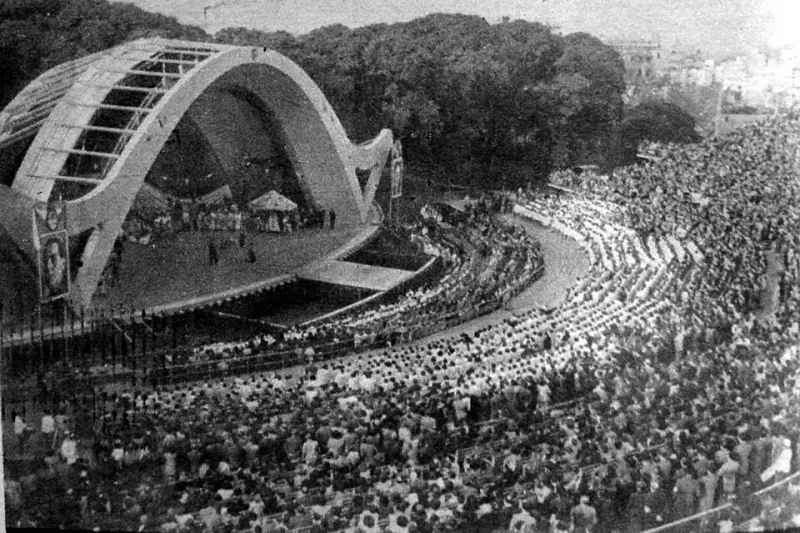
Photo: Unknown authorUnknown author, Public domain, via Wikimedia Commons
The photographs from the first summer were stunning. Aerial shots of a fairground transformed — stages rising out of what used to be a dusty exhibition space, food vendor rows where livestock competitions once ran, a crowd stretching back far enough to make the whole thing look like something from another era of American music. The local paper ran a full-color spread. The mayor gave a quote about economic revitalization. The chamber of commerce printed it on a brochure.
Three years later, the same fairground sits mostly empty. The permanent stage infrastructure the festival organizers promised to donate to the county is there — rusting slightly, the electrical hookups no longer up to code. The vendor row is a gravel lot. And the local businesses that took out loans to expand their capacity for festival weekend are still paying them off.
This story plays out in different versions across the United States more often than the rock festival industry likes to acknowledge.
The Promise That Gets Made
Festivals come to mid-sized towns with a pitch that's genuinely appealing. Economic impact studies — often commissioned by the festival itself — project tens of millions of dollars flowing into the local economy over a single weekend. Hotel occupancy. Restaurant sales. Gas stations. Grocery stores. The logic is sound enough on paper, and there are real examples of festivals that have become anchor events for their host communities.
But the studies tend to project optimistic attendance numbers, and they rarely account for the ways festival infrastructure can actually divert spending away from local businesses rather than toward them. When a festival brings in its own food vendors, its own merchandise operations, and its own beverage contracts — which is standard practice — the money spent inside the gates doesn't necessarily reach the diner three blocks away.
"We were told to expect overflow," said Sandra Howell, who owns a breakfast restaurant in a small Tennessee city that hosted a regional rock festival for four consecutive summers before the organizers relocated to a larger market. "What we actually got was a parking lot full of cars and people who'd already eaten at the festival and weren't hungry anymore. I hired four extra staff members those weekends. I didn't need them."
The Infrastructure Trap
One of the most consistent patterns in festival towns that end up struggling is what might be called the infrastructure trap. Counties and municipalities often contribute to festival success through public resources — road improvements, temporary utility hookups, expanded law enforcement coverage, waste management — under the assumption that the economic return will justify the outlay. Sometimes it does. Sometimes the math never works out.
In several documented cases, festival organizers negotiated agreements that tied infrastructure improvements to multi-year commitments, then exercised exit clauses when attendance disappointed or a better venue opportunity emerged. The improvements stayed. The festival left. The town owned infrastructure built specifically for an event that no longer existed.
"We repaved access roads to that property," said a former city council member from a small Midwestern city who asked not to be named due to ongoing legal considerations related to the festival's departure. "We put in drainage systems. The county extended a water line. All of that was done in anticipation of this becoming a long-term partnership. When they left after year two, we had a very nice road to an empty field."
The Community Fracture
Beyond the financial accounting, some festival departures leave behind social damage that's harder to quantify. In towns where the festival became a point of civic pride — where local volunteers staffed operations, where high school bands got opening slots, where the whole community invested emotionally in the event's identity — the loss can feel genuinely destabilizing.
Residents who opposed the festival from the beginning, often citing noise concerns, traffic disruption, and skepticism about the economic claims, sometimes find themselves in an uncomfortable position: proven right in the worst possible way. And the civic leaders who championed the event are left explaining what went wrong to constituents who took them at their word.
"There's a trust deficit that lingers," said Dr. Angela Torres, a regional economist at a university in the Southeast who has studied the lifecycle of entertainment events in small markets. "When a community organizes itself around something and then that thing disappears, the aftermath isn't just financial. People feel foolish for having believed in it. That affects how they engage with the next proposal, the next development pitch, the next time someone comes to town with a big idea."
What Actually Survives
It would be wrong to suggest that every festival departure is a pure loss. Some infrastructure improvements do have lasting value. Some local vendors make genuine connections with touring industries that persist beyond a single event. And occasionally, the experience of hosting — even a festival that ultimately leaves — builds organizational capacity that serves a community later.
But the pattern of towns left holding the bag is real and documented, and it tends to share common features: festivals that were undercapitalized from the start, agreements that favored organizer flexibility over host-city protection, and economic impact projections that were never subjected to serious independent scrutiny.
The rock festival industry has a genuine and powerful story to tell about music, community, and shared experience. That story is real. But so is this one — the towns where the summer of rock became a cautionary tale, where the stages came down and the bills stayed up, and where the photographs from that first spectacular aerial shot feel like evidence of something that was always a little too good to be true.
Those towns deserve to be part of the conversation too.