Priced Out of the Pit: How Rock Festivals Learned to Sell Exclusivity and Lost Something Real
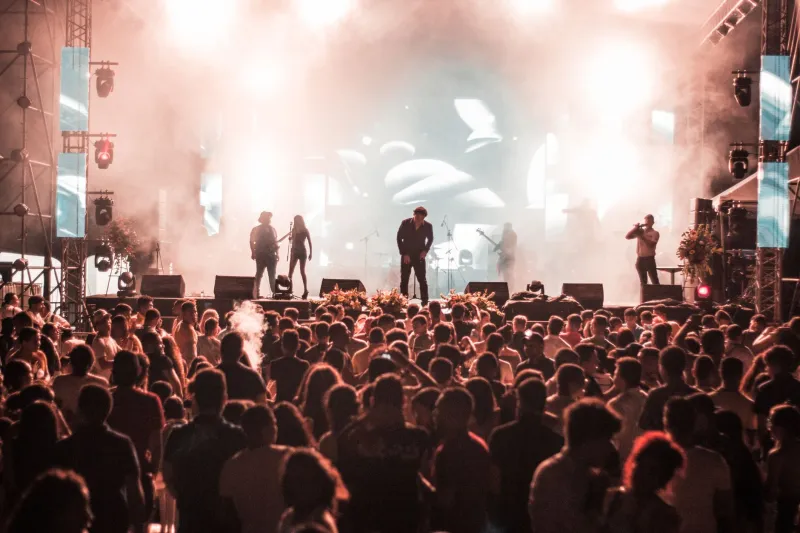
Spend enough time talking to people who've been attending rock festivals since the nineties and a pattern emerges. They'll describe the same thing in different words: a feeling of being in a crowd where everyone was, for a few hours, operating on the same level. The doctor and the dishwasher were both muddy, both sunburned, both angling for the same view of the stage. That shared condition was part of the point.
That feeling is getting harder to find. And the forces eroding it aren't random — they're deliberate, revenue-generating, and increasingly baked into how major US festivals are designed from the ground up.
The Architecture of Separation
Walk into a major rock festival today and the stratification is physical before it's anything else. There's a general admission zone, then a rail section you can access with a wristband upgrade, then a VIP area with better sightlines and shorter bar lines, then a platinum tier with air conditioning and private bathrooms, then — at some events — an ultra-premium section that costs more than some people's rent and includes dedicated concierge service.
Each of those layers has its own price point, its own crowd density, its own relationship to the music. The people in the platinum section aren't necessarily more passionate about the headliner. They're just wealthier, or they work for a sponsor, or they know somebody. The people in general admission, who might have saved for months to be there, are watching the same set from further back, in more discomfort, with fewer amenities.
This is not a secret. Festival organizers will tell you openly that tiered ticketing is how events remain financially viable in an era of rising production costs, insurance premiums, and artist guarantees. That's a real argument. But it's worth separating the economic necessity from the cultural consequence, because the two things are getting conflated in ways that let the industry off the hook.
The App Problem
Beyond ticket tiers, a newer and arguably more insidious form of stratification has arrived: access gated by digital behavior. Multiple major festivals now offer early ticket access, presale opportunities, and even physical queue priority to fans who engage with their apps, accumulate loyalty points, or hold premium streaming subscriptions through partner platforms.
On the surface, this looks like a fan reward program. In practice, it advantages people who are already plugged into the digital ecosystem — who own smartphones with storage space, who have the subscription services, who know how to navigate the interfaces. Older fans, lower-income fans, and fans without reliable data plans are quietly disadvantaged before the first ticket even goes on sale.
"I've been going to [a major Midwest rock festival] for eleven years," says Marcus, a 34-year-old teacher from Columbus who asked that his last name not be used. "Last year was the first time I couldn't get a decent ticket because I don't have the premium app tier. I'm not going to pay a monthly fee to a streaming service I don't use just to get earlier access to a festival I've been loyal to for over a decade. It felt like a slap."
His experience is increasingly common, and the people running these systems know it. The goal isn't to reward loyalty in any traditional sense — it's to monetize the path to the event itself.
The Generational Fault Line
There's a generational dimension to this shift that doesn't get enough attention. Rock festivals were built, culturally and economically, on the idea that young people with limited resources could access the same experience as everyone else. Woodstock's mythology is inseparable from the image of kids who couldn't afford tickets just walking in. Lollapalooza's early years were explicitly counterculture, priced and structured to be accessible.
The generation that built that culture is now in their fifties and sixties, and many of them can afford the premium tiers. Their kids — the generation that would logically carry rock festival culture forward — are facing a completely different math. Entry-level general admission for a major three-day event, before travel, lodging, food, and merchandise, routinely clears $400. For a 22-year-old navigating student debt and a tight job market, that number is prohibitive.
When the accessible entry point disappears, so does the pipeline of new fans. The premium-tier crowd doesn't sustain a culture — it consumes one.
What's Actually at Stake
The democratizing spirit of rock festivals was never just a vibe. It was functional. It meant that a band playing to a mixed crowd — economically, geographically, generationally — had to earn the room. There was no guaranteed audience of people who'd paid enough to feel invested in enjoying themselves. You had to win over people who had nothing to prove by being there.
That friction made better music. It made more honest crowd dynamics. It made the moments when a set really worked feel earned in a way that a curated VIP experience rarely replicates.
None of this means festivals should operate at a loss or ignore economic reality. But there's a meaningful difference between adjusting prices to stay solvent and engineering an experience that systematically prices out the people who made rock festival culture worth having in the first place.
Some smaller and mid-size festivals are pushing back — holding tiered pricing to a single upgrade level, capping VIP section sizes, and keeping general admission genuinely general. They're worth supporting, both with ticket purchases and with attention.
Because once the pit becomes a perk, something fundamental changes. And it doesn't come back cheap.