The Songs That Never Show Up: Rock's Festival Setlist Blind Spots Explained
The Songs That Never Show Up: Rock's Festival Blind Spots Explained
You've done everything right. Bought the ticket early, booked the campsite, memorized every lyric on the album. Then the band you've been waiting all summer to see walks out under those lights — and the one song you came for never happens. The crowd around you feels it too. That collective exhale of quiet disappointment that somehow doesn't kill the vibe but sticks with you on the drive home.
This isn't bad luck. It's strategy.
Across the US festival circuit, from Bonnaroo's sprawling Tennessee fields to the California heat of Coachella, rock bands are making deliberate, sometimes painful choices about which songs never get played in front of massive outdoor crowds. And the reasons are far more layered than most fans realize.
The Clock Is the Cruelest Bandmate
Let's start with the most obvious constraint nobody fully accounts for: time. A headlining slot at a major US festival typically runs 75 to 90 minutes, hard stop. Production schedules are locked weeks in advance. Curfews are enforced by local ordinances. Stage changeovers are timed to the minute.
For a band with five albums and twenty years of catalog, that's an almost impossible editorial problem. You've got maybe 18 to 22 songs if you move efficiently. So what gets cut?
"The songs that suffer most are the ones that need room to breathe," says one touring setlist coordinator who has worked with multiple platinum-selling rock acts and asked to remain anonymous. "A six-minute deep cut with a three-minute instrumental build just isn't viable when you're trying to hit your marks and get off the stage before the production crew loses their minds."
This is why fans of prog-adjacent and post-rock bands often leave festivals frustrated. The songs that define those artists in the studio — the sprawling, dynamic ones — are exactly the songs that get sacrificed at the altar of the festival clock.
The Crowd Equation Nobody Talks About
Here's something that might sting a little: festival audiences are not the same as your band's core fanbase. Not even close.
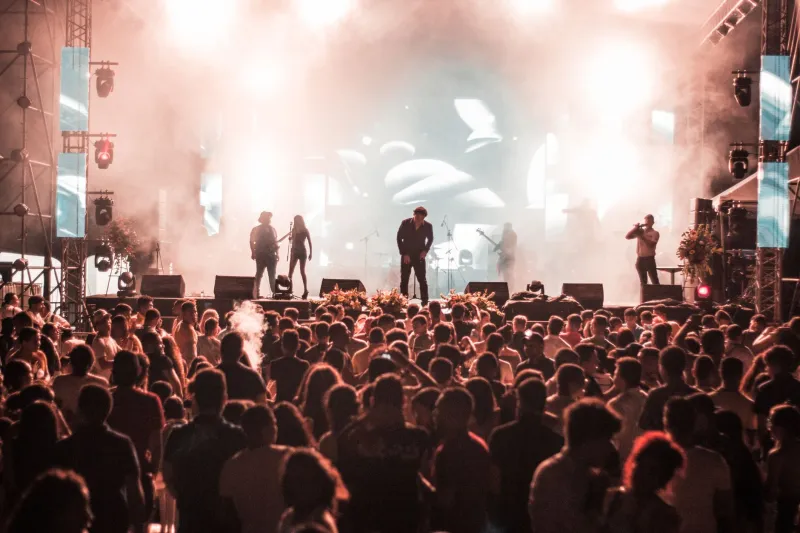
A band playing a mid-afternoon slot at a major festival might be performing in front of 30,000 people. Maybe 8,000 of those are genuine fans who know the deep cuts. The other 22,000 are curious, casually interested, or just waiting for the headliner. Setlists get built around that reality.
"You want to grab people who don't know you," explains a musician who fronts a well-known American rock band currently on the summer circuit. "If you open with a fan-favorite that only your hardcore listeners know, you've lost the room before you've even started. The song your fans love most is sometimes the worst possible choice for that environment."
This creates a brutal paradox. The festival stage — one of the highest-profile platforms in rock — often demands the most commercially accessible version of a band's catalog. Which means the weird, beloved, deeply personal songs stay home.
Production Nightmares and the Songs That Break the Stage
Some songs simply don't translate to a festival environment without massive logistical support. Think about a track that was recorded with a string quartet, or one that relies on a specific keyboard rig that doesn't survive the rigors of festival load-in. Or consider songs built around backing vocal arrangements that require additional performers who aren't on the touring roster.
Festival production is a different beast than a band's own headlining tour. Shared backlines, compressed soundchecks, and limited stage time mean that technically demanding songs get quietly shelved.
"There's a whole category of songs we call 'home tour only,'" the anonymous setlist coordinator says. "They're not gone forever. They're just not going to happen when you've got 40 minutes of soundcheck for a 90-minute show."
When the Song Becomes Bigger Than the Band
There's another reason certain beloved tracks disappear from festival sets — one that's more psychological than logistical. Sometimes a song gets so big, so associated with a particular era or image, that the band starts avoiding it as an act of artistic self-preservation.
This is especially common with early breakthrough singles. A band that's spent a decade evolving their sound doesn't necessarily want the defining moment of that evolution to be the three-chord song they wrote at 23. Playing it at a festival — in front of cameras, in front of a massive audience — feels like a step backward.
Fans interpret this as ingratitude. The band sees it as survival.
"You have to protect your relationship with your own music," says the rock musician we spoke with. "If every time you play that one song, it's the only thing anyone talks about, eventually it starts to feel like a cage. Festival sets are very public. Whatever you play there becomes the story."
The Fan Expectation Trap
There's a cruel irony at work in all of this. The more passionately fans campaign for a song — on social media, in Reddit threads, in the comment sections of setlist tracking sites — the more pressure builds around it. And pressure, paradoxically, can make bands less likely to play it.
When a song becomes the subject of intense fan expectation, playing it stops feeling like a gift and starts feeling like an obligation. And nothing kills artistic spontaneity faster than obligation.
Some bands have started deliberately rotating their most-requested songs in and out of setlists just to keep things unpredictable. Others have started playing them only at non-festival dates, where the stakes feel lower and the moment feels more genuine.
So What Does This Mean for You?
Honestly? Go to the festival anyway. The song you're hoping for might not happen — and now you know why. But what usually does happen is something better: a band performing under pressure, in front of a crowd they're actively trying to win over, finding versions of themselves they don't usually show.
Some of the most electric festival moments in rock history happened precisely because bands weren't playing it safe. They ditched the expected, leaned into the room, and created something nobody planned.
The setlist isn't the whole story. It's just the part you can predict. The rest of it — the chaos, the energy, the unexpected — that's what you actually came for.