48 Hours, Zero Leaks: The Frantic Secret Operation Behind Rock's Greatest Surprise Appearances
48 Hours, Zero Leaks: The Frantic Secret Operation Behind Rock's Greatest Surprise Appearances
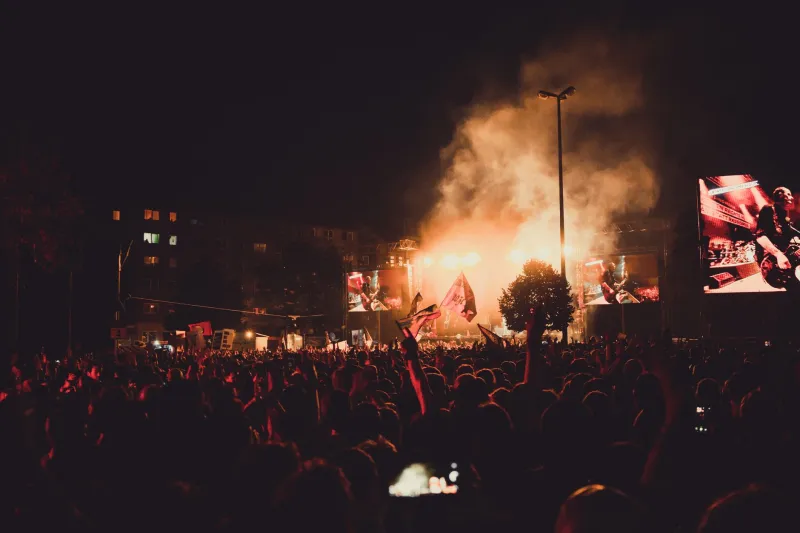
The roar that erupts when an unannounced legend steps into the spotlight is one of rock music's most visceral thrills. It feels spontaneous. It feels like lightning. And that's exactly the point — because the people who made it happen spent the better part of two days making sure it looked like nobody planned a thing.
Surprise guest appearances at major US rock festivals are, paradoxically, some of the most carefully engineered moments in live music. The chaos is choreographed. The spontaneity is scheduled. And the silence required to pull it off is, frankly, impressive given how many people are involved.
It Usually Starts With a Text Nobody's Supposed to Send
Most of these moments begin not with a grand plan but with an offhand message — an artist's manager reaching out to a festival booker, or two touring camps whose paths happen to cross in the same city that weekend. "Half the time it's genuinely organic," says one veteran festival production coordinator who has worked Midwest and East Coast circuits for over a decade. "Someone's already in the area, they've got nothing on the books Saturday night, and their people make a call."
But organic doesn't mean easy. From the moment both camps say yes, the clock starts ticking — and the list of moving parts is longer than most fans would ever imagine.
First, there's the question of whether the guest artist is even physically available. Festival weekends are notoriously congested on private aviation. Charter jets need to be repositioned, sometimes from hundreds of miles away, with flight windows timed around headliner sets that can't be moved. One production manager recalled scrambling to reroute a private flight after an East Coast weather system threatened to ground everything within a four-state radius. The guest made it — barely — landing less than 90 minutes before showtime.
The Crew That Can Never Talk About It
Once the artist is confirmed and en route, the real logistical sprint begins backstage. Stage managers, monitor engineers, and backline technicians are quietly looped in on a strict need-to-know basis. Nobody gets told more than their specific job requires. The lighting director might know there's an extra body hitting the stage. The front-of-house engineer might get a quick rundown of the guest's preferred monitor mix. But even within the crew, the full picture is deliberately fragmented.
"You tell the lighting guy there's a special moment coming in the third song of the encore. You tell the monitor tech to pull up a preset from the guest's last tour. You don't tell either of them who it actually is," explains a stage manager who has worked major festivals from Bonnaroo to Lollapalooza. "The fewer people who know the name, the fewer chances it gets out."
Social media has made this exponentially harder over the past decade. A single photo posted from the wrong angle backstage — a recognizable guitar case, a distinctive jacket — can blow the whole thing before the headline act even hits the stage. Phones aren't explicitly banned for crew in most cases, but the culture around these moments is one of intense, unspoken accountability. You don't post. You just don't.
Borrowed Gear and Hushed Soundchecks
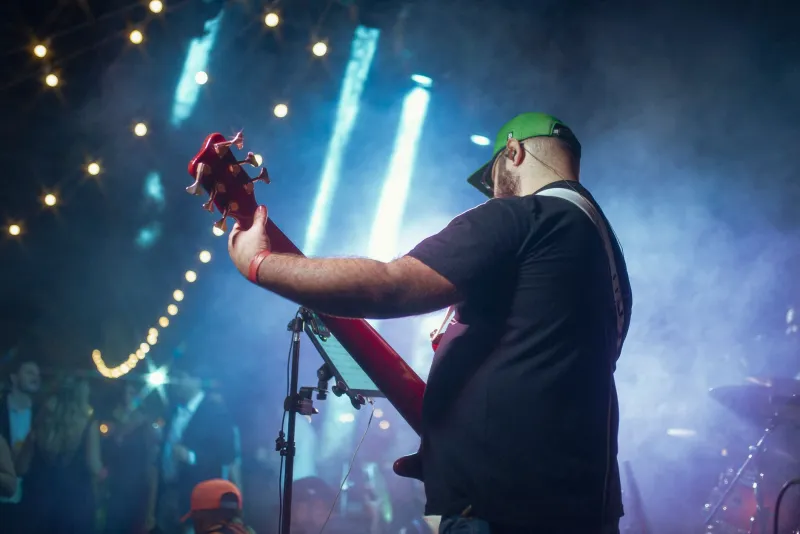
Here's something that might surprise even die-hard gear nerds: surprise guests frequently perform on equipment that isn't theirs. When an artist flies in for a one-song cameo with no touring rig in tow, they're working with whatever the headliner's backline crew can piece together. That might mean a borrowed Les Paul, a house amp dialed in by ear, or a keyboard patch approximated from memory.
For vocalists, it's simpler — a mic is a mic, more or less. But for guitarists and instrumentalists with famously specific tonal preferences, playing on unfamiliar gear in front of 50,000 people is its own kind of high-wire act. "Most of the great ones just adapt," says one backline tech. "They've been playing long enough that they can make almost anything sound like themselves."
Soundchecks, when they happen at all, are brief and deliberately obscure. They might occur during a scheduled changeover when ambient festival noise provides cover, or during a moment when the main stage area is restricted to essential crew. Sometimes there's no soundcheck at all — the guest walks out cold, trusting the monitor engineer to make real-time adjustments.
The Code of Silence Extends to the Headliner's Camp
What's often overlooked is how tightly the secret is kept even within the headlining artist's own circle. Band members' spouses, extended road crew, label reps who happen to be backstage — none of them are necessarily in the loop. The tighter the circle, the cleaner the surprise.
There have been near-misses. A well-meaning tour manager who mentioned the appearance to a journalist friend. A guest's assistant who posted a vague but traceable location tag. In the era of Reddit's notoriously sharp festival-tracking communities — the same obsessive sleuths who crack lineup codes months before official announcements — even a blurry background detail can send the internet spiraling toward the truth.
When leaks do happen, the decision tree branches fast. Do you pull the appearance entirely? Accelerate the timeline? Lean into the rumor and let anticipation build? There's no universal answer, and festival producers have handled it every way imaginable.
When It All Goes Right, Nobody Remembers the Chaos
The moments that land in festival lore — the ones fans talk about for years — tend to share a common quality: they feel utterly inevitable in retrospect, even though they were hanging by a thread hours before. That's the craft of it. All the frantic coordination, the borrowed cables, the whispered crew briefings, the rerouted flights — they exist specifically so the moment on stage can feel like pure, unrehearsed electricity.
And when a guitar hero walks out of the wings to a crowd that collectively loses its mind, the people who made it happen are usually already thinking about the next problem. A post-set debrief. Getting the guest back to the airstrip. Making sure nobody on the crew accidentally confirms anything on Twitter before the festival's own socials post the clip.
The surprise, in the end, is the product. Everything else is just the machinery nobody's supposed to see — running hot, running quiet, and running exactly on time.