First Note, Last Word: The Sacred Opening Songs Rock's Biggest Acts Will Never Let Go Of
First Note, Last Word: The Sacred Opening Songs Rock's Biggest Acts Will Never Let Go Of
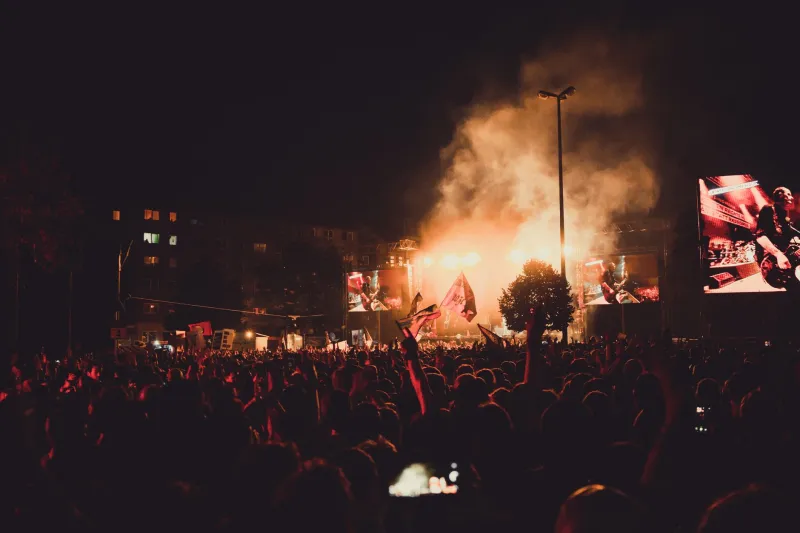
There's a moment, somewhere between the house lights dropping and the first chord hitting the air, when a rock festival crowd holds its collective breath. In that half-second of pure anticipation, the band on stage already knows exactly what's coming. They've known for years. Decades, sometimes. Because for a surprising number of rock's biggest names, that opening song isn't a decision made in a production meeting or a strategy session — it's closer to a vow.
Call it superstition. Call it ritual. Call it the kind of psychological armor that only makes sense when you're standing in front of 80,000 people and one wrong move can unravel the entire night.
The Myth of the "Perfect First Note"
Ask almost any veteran tour manager about opening songs, and you'll hear a version of the same story: somewhere along the way, a band played a certain track first, the show went nuclear, and that was that. The song became untouchable.
"There's this thing that happens when a run of shows goes really well," says one tour manager who's worked with multiple platinum acts over a 20-year career on the US festival circuit. "Nobody wants to be the person who says, 'Hey, let's shake up the opener.' Because if the next show tanks, guess who everyone's looking at?"
It's not pure irrationality, though. Opening songs carry a weight that most fans don't fully appreciate from the pit. The first track sets the energy contract for everything that follows — the tempo, the emotional register, the crowd's first physical response. Get it right and the whole night flows. Get it wrong and you're spending the next three songs trying to claw back momentum you never had.
For some artists, that calculus has calcified into something closer to mythology.
When the Song Becomes a Ritual
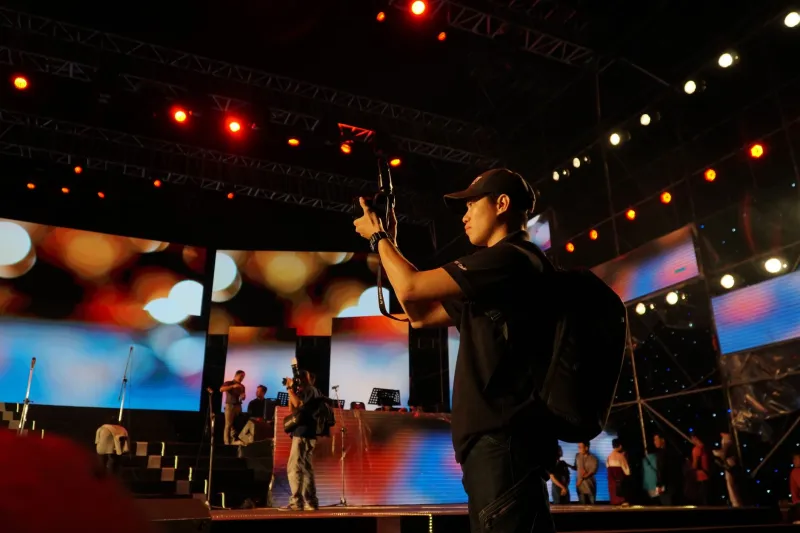
The psychology here is well-documented, even if rock musicians rarely frame it in clinical terms. Repetition creates certainty, and certainty is extraordinarily valuable when you're operating in the controlled chaos of a major festival environment. Coachella, Bonnaroo, Lollapalooza — these aren't club gigs where you can feel out the room. You walk out, the cameras are rolling, the livestream is live, and fifty years from now someone's going to be watching that footage.
Under those conditions, familiarity isn't laziness. It's a survival mechanism.
"I've seen guys who have been doing this for thirty years still get genuinely rattled if something threatens the opener," says one festival production coordinator who's worked backstage at some of the country's biggest summer events. "We had a situation once where a technical issue meant we had to delay the first song. The artist didn't want to start with the backup option. They wanted to wait until the problem was fixed. At a festival. Where every minute costs money and the schedule affects twelve other acts."
The problem was fixed. The opener went as planned.
Fans Are Watching — More Than You Think
Here's what makes the opening song ritual especially fascinating from a festival culture standpoint: the audience is in on it. Maybe not consciously, but the obsessive fan communities that orbit major rock acts have been tracking setlists for decades. Sites dedicated to cataloging every show, every deviation, every surprise swap have turned setlist data into something approaching academic research.
When a band that's opened with the same song at every major festival appearance for fifteen years suddenly switches it up, the online reaction can be seismic. Forums light up. Reddit threads spiral. Some fans read it as a sign of creative renewal. Others treat it like a betrayal — as if the unspoken agreement between artist and audience has been quietly torn up.
That's not a small thing. For a certain kind of rock fan, the opening song is the handshake. It's the band saying, we know who we are, you know who we are, and we're all here together. Change it without warning and you've introduced uncertainty into a space that's supposed to feel like home.
The Chaos of the Forced Change
Of course, sometimes the choice gets made for you. Equipment failures, medical emergencies, a guest musician who doesn't show, a set that runs thirty seconds long on the stage before yours and suddenly your intro tape is cutting off — festivals are machines with a thousand moving parts, and occasionally one of those parts fails at exactly the wrong moment.
The stories that circulate backstage about forced opener changes read like disaster films compressed into three minutes.
One production insider recalled a major US amphitheater show where the guitarist's amp blew right as the intro tape ended. The band had exactly thirty seconds to call an audible. They switched to a song that required a different tuning setup — which meant someone had to sprint a guitar from the side stage while the frontman stalled with crowd banter. The audience had no idea. The band was rattled for the next four songs.
"You'd think after that they'd have a backup plan," the insider said. "They did not build a backup plan. The opener was still the opener the next night."
That's the thing about these rituals — a near-disaster doesn't break them. If anything, surviving the chaos tends to reinforce the superstition. The opener held, the show recovered, proof of concept.
The Spiritual Contract
It would be easy to dismiss all of this as the eccentric behavior of people who've spent too long in the pressure cooker of professional touring. But there's something genuinely interesting happening at the intersection of performance psychology, fan culture, and the specific alchemy of live rock music.
The opening song is, in a very real sense, a promise. It's the moment an artist declares their identity to a crowd that might include people who've been waiting years for this exact show. Veterans of the festival circuit understand that promise on a cellular level — they've built careers on the reliability of that first note landing exactly the way it's supposed to.
Change it arbitrarily and you risk breaking something that took years to build. Keep it locked in and you create a moment that fans will describe to their kids someday: I was there, the lights went down, and then — that song.
No algorithm captures that. No streaming metric measures it. It lives in the space between the last second of darkness and the first wall of sound.
And for the bands who've figured out exactly which song belongs in that space? They're not changing it. Not for a production meeting, not for a setlist refresh, and definitely not for the chaos that any given festival night is ready to throw at them.
The opener is the opener. Some rules in rock are written in permanent ink.