Three Songs and You're Out: The Hidden Rule That's Erasing Rock Festival History One Shot at a Time
Three Songs and You're Out: The Hidden Rule That's Erasing Rock Festival History One Shot at a Time
Somewhere in a filing cabinet in Chicago, there's a print of a sweat-soaked Robert Plant mid-scream at a 1977 festival show. The photographer who took it had no time limit, no handler tapping his shoulder, no laminate that expired after the opening riff of the third song. He just shot until the music stopped.
That era is long gone. And the people who document rock festivals for a living want you to know exactly what we're all losing because of it.
What the Three-Song Rule Actually Means
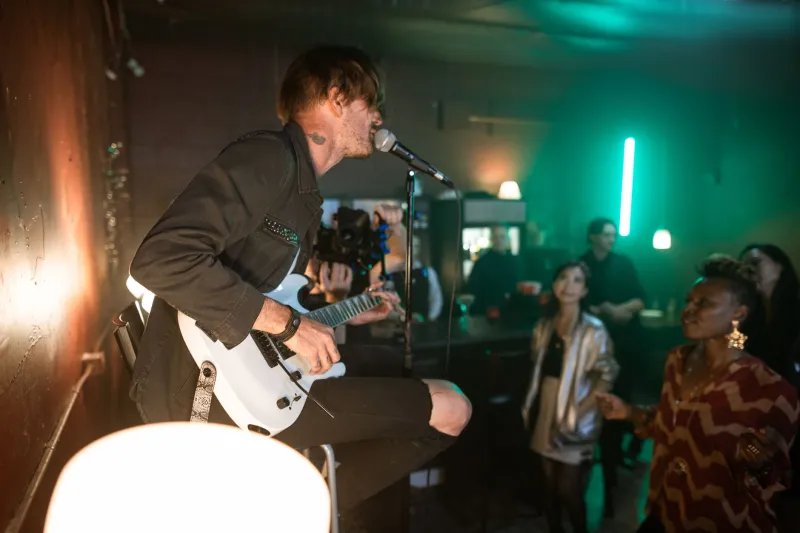
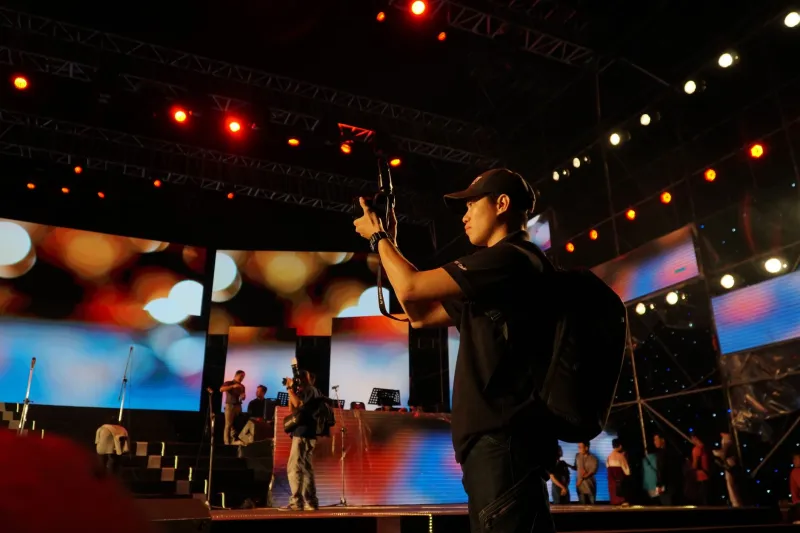
If you've never worked a photo pit at a major festival, the mechanics might surprise you. Photographers credentialed to shoot a headliner are typically granted access to the narrow strip of real estate between the stage and the security barrier — the pit — for the duration of the first three songs only. After that, a festival staffer or tour manager escorts them out, sometimes mid-song, sometimes mid-shot.
Three songs at an average rock set runs somewhere between nine and fifteen minutes. At a festival where a headliner might play for ninety minutes or more, that's a window of less than 17 percent of the total performance. Everything that happens after — the emotional peaks, the surprise guests, the moment a frontman drops to his knees during the set's emotional centerpiece — goes undocumented by credentialed press.
"You're essentially photographing the warm-up," says Marcus Delray, a freelance photographer based in Nashville who has covered major festivals from Bonnaroo to Lollapalooza for the better part of a decade. "By song three, the band is just finding their footing. The real stuff happens at song eight, song twelve. And we're already in the media tent eating a granola bar by then."
Where the Rule Came From
The three-song rule didn't materialize out of thin air. Industry insiders trace its origins back to the 1990s, when a handful of major artists — tired of unflattering candid shots appearing in newspapers without their approval — began inserting photo restriction language into their tour riders. The logic was simple: limit access, limit liability. If a photographer only catches the polished opening, the chances of a bad angle making the front page drop considerably.
Over time, what started as a preference for a few image-conscious acts calcified into an industry standard. Festival promoters, eager to land big-name headliners, agreed to the terms. Other artists saw the precedent and followed suit. By the mid-2000s, the three-song rule had become so normalized that many photographers entering the industry today assume it's simply how things work — not a policy that was deliberately constructed and could, theoretically, be challenged.
But it goes deeper than vanity. Lighting is a major factor. Festival production teams often design the most visually spectacular moments — the pyrotechnics, the dramatic backdrops, the coordinated light shows — to hit later in the set. Some photographers and industry observers believe this is intentional: give credentialed press the workmanlike opening, save the cinematic moments for the band's own official content team, who operates under no such restrictions.
"The tour's photographer is in the pit all night," says Delray. "They're getting the shots that end up on the band's Instagram, on the merch, on the next album cover. Meanwhile, I've got fifteen minutes and I'm shooting into a half-lit stage."
The Archival Problem Nobody's Talking About
Here's where the conversation shifts from frustrating to genuinely alarming. The photographs that music archivists, historians, and cultural institutions rely on to document the history of American rock didn't come from official band channels. They came from working press photographers who had time, access, and editorial independence.
Jane Holloway, who manages a music photography archive affiliated with a Midwestern university she asked not to be named, says the pipeline of historically significant images has slowed to a trickle. "We used to receive submissions from festival photographers that captured full narrative arcs of a performance," she explains. "Now what we get is technically competent images of a band standing at microphones during their most composed, least interesting moments. It's the visual equivalent of only recording the first chapter of a book."
The concern isn't hypothetical. Think about the photographs that defined specific eras of American rock festival culture — the Woodstock images, the early Lollapalooza shots, the raw documentary work from early Ozzfest. Those images exist because photographers had room to roam, time to wait for the right moment, and nobody yanking their credential after song three. The cultural record we take for granted was built on access that no longer exists at scale.
Festival Organizers Aren't Entirely Unsympathetic
To be fair, festival organizers often find themselves caught between competing pressures. Booking a major headliner means accepting the headliner's terms. Pushing back on photo restrictions can mean losing the act entirely — a non-starter for a festival whose ticket sales depend on that name above the marquee.
"We don't love the three-song rule either," admitted one festival operations director who spoke on background. "But when an artist's management sends over the contract and that clause is in there, we're not in a position to negotiate it out. We'd rather have the band with restrictions than not have them at all."
Some smaller and mid-tier US festivals have pushed back more successfully. Regional events with less leverage over talent but stronger relationships with their local press communities have experimented with longer pit windows, full-set access for select photographers, or coordinated pools where one photographer shoots the full set and shares images with credentialed outlets. These workarounds exist, but they're the exception, not the rule.
The Gear Doesn't Matter If the Access Isn't There
It's a strange irony that camera technology has never been more capable. A working festival photographer today can capture images in near-darkness with a sharpness and dynamic range that would have been unimaginable in the film era. The tools to document rock history have never been better. The permission to use them has never been more restricted.
For photographers like Marcus Delray, the frustration is personal and professional in equal measure. "I got into this because I wanted to do what those guys did in the '70s — be present for something that mattered and bring it back for people who weren't there," he says. "Instead, I'm fighting for elbow room in a pit for twelve minutes and then going home with technically fine photos of a band tuning up."
The images that define the next generation of American rock festival history are being made right now. The question is who's making them, under what conditions, and whether the moments that matter most are being captured at all — or whether they're disappearing into the dark somewhere around song four, with nobody left in the pit to see them.