Invisible Architects: The Sound Engineers Who Decide Whether Your Favorite Festival Set Becomes a Legend
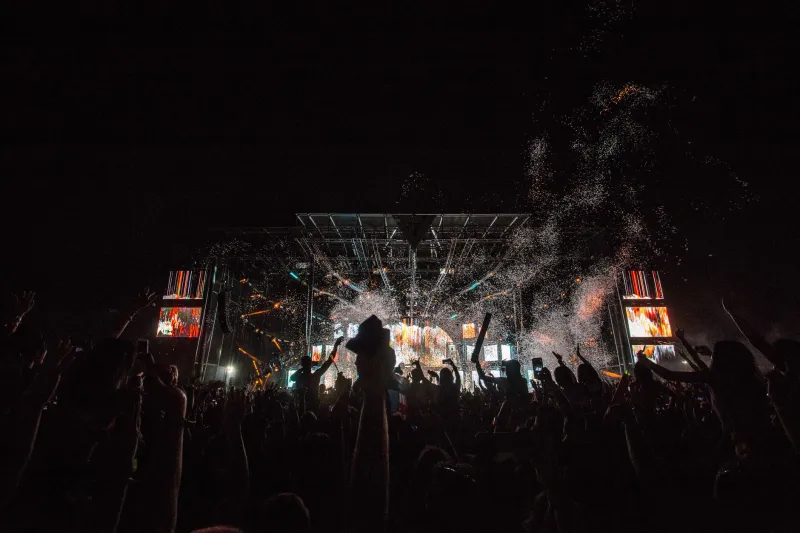
You remember the moment. Maybe it was a wall of guitar hitting you square in the chest at a festival in the desert, or a vocalist's voice cutting through the summer heat with almost supernatural clarity. You turned to your friend, eyes wide, and said something like, "How does it sound this good?"
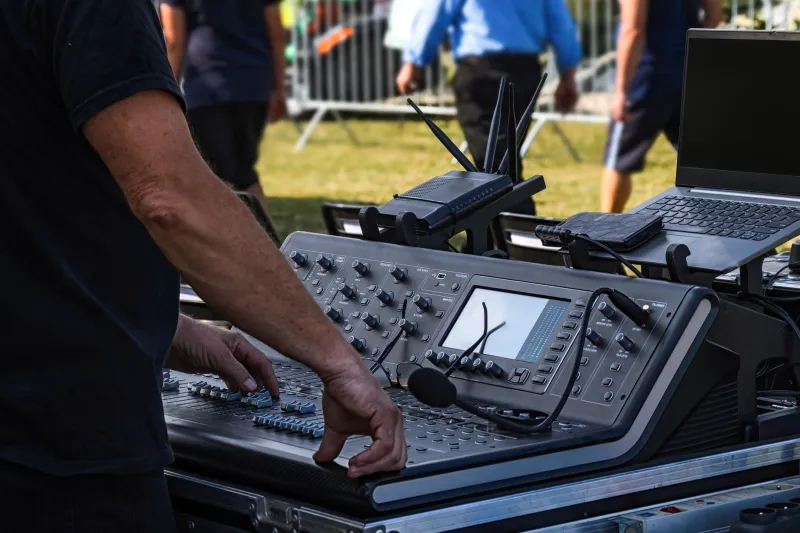
You probably credited the band. Fair enough — they earned it. But somewhere behind a massive mixing console, tucked into a tower of gear roughly the size of a small apartment, a live sound engineer just exhaled quietly and moved on to the next adjustment. Nobody noticed. That's exactly how they like it.
The Most Important Person You've Never Thought About
At any major US rock festival — think Lollapalooza, Bonnaroo, Download Fest, or even the regional circuit that feeds into them — the front-of-house (FOH) engineer is the invisible hand guiding every sonic experience you have. They're not on the stage. They're not in the press photos. But pull any veteran festival-goer aside and ask them about a legendary set, and somewhere in that story is a mix that made it transcendent.
"The band plays the notes," says one longtime FOH engineer who has worked major stages across the Midwest and Southeast for nearly two decades. "But we decide what those notes mean to the person standing 200 feet away in the middle of a field. That's not a small thing."
It really isn't. A rock festival stage is one of the most acoustically hostile environments imaginable. You've got monitor wedges blasting stage sound back at performers, massive line arrays projecting outward at tens of thousands of people, ambient crowd noise that shifts in density and direction minute by minute, and weather conditions that can alter how sound travels in real time. Wind picks up? The high-end frequencies scatter. Temperature drops? Bass response changes. A cloud moves in front of the sun and suddenly the entire acoustic equation shifts.
And all of this is happening while the drummer is playing 30 beats per minute faster than soundcheck.
Setlist Changes and the Art of Controlled Panic
If there's one thing that separates great live engineers from good ones, it's how they handle the unexpected — and in rock festival culture, the unexpected is basically the schedule.
Lead singers are notorious for calling audibles mid-show. A crowd reacts especially hard to a particular song, and suddenly the artist pivots, scrapping the planned order and jumping to something that wasn't even rehearsed that day. For most of the audience, this reads as spontaneous rock-and-roll magic. For the FOH engineer, it's a controlled sprint through a mental database of every EQ setting, reverb tail, and input channel associated with a song they may not have touched during soundcheck.
"You've got maybe four seconds from when the guitarist hits that opening riff to when the vocal comes in," explains one engineer who has toured with multiple platinum-selling rock acts before transitioning to festival work. "In those four seconds, you're recalling a snapshot, checking your gains, watching the stage monitors, and praying the in-ear system didn't just cut out. It's muscle memory and adrenaline."
The communication infrastructure behind all of this is its own kind of art form. FOH engineers are in constant contact with monitor engineers — the equally underappreciated professionals who manage what the artists themselves hear on stage — through headsets, hand signals, and occasionally a shared language of raised eyebrows and subtle nods that would look completely insane to an outsider.
The Room You Can't Control
Here's something that doesn't get talked about enough: no two festival stages sound the same, even at the same festival.
The main stage at a major American rock festival is a different acoustic universe than the second stage a quarter mile away. The terrain, the tent structure, the proximity of neighboring stages bleeding sound into the mix — all of it creates a unique challenge that engineers have to solve from scratch, every single time.
Veteran engineers often arrive days before a festival opens to walk the grounds, test the PA systems, and build what they call a mental map of the room. Except there is no room — it's open sky, uneven ground, and a crowd that will absorb and reflect sound in ways that are nearly impossible to fully predict.
"You do your prep, you trust your ears, and then you adapt," says one engineer who has worked stages from Austin to Chicago. "The best mixes I've ever done weren't the ones where everything went perfectly. They were the ones where everything went sideways and I figured it out fast enough that nobody knew."
When It Goes Right, Nobody Talks About It
There's a bitter irony at the center of this profession. When a mix is genuinely exceptional — when the guitars are warm and present without drowning the vocals, when the kick drum hits you physically without muddying the low end, when the whole thing feels effortless and alive — nobody in the crowd thinks about the mix at all. They just think about the music.
That's actually the goal. A great live mix is meant to be invisible, to dissolve into the experience so completely that the audience never notices the craft underneath it. The engineer succeeds most completely when they disappear entirely.
But when something goes wrong — a feedback shriek, a vocalist buried under guitars, a bass that sounds like it's coming from a different zip code — suddenly everyone's a critic. Social media lights up. The band gets blamed. And the person who actually had their hands on the faders? Still invisible, just now in a different way.
Giving Credit Where It's Overdue
The best engineers in the business have quietly shaped some of the most iconic moments in American rock festival history. They've made arena-level artists sound transcendent in open fields. They've saved sets that should have fallen apart. They've turned technically flawed performances into emotionally perfect ones through sheer instinct and craft.
Next time you're standing in that crowd and a song hits differently than it ever has on record — fuller, more alive, more present — take a second to look past the stage. Somewhere behind a tower of gear, someone just made a decision you'll never know about.
And that decision is part of why you'll remember this night for the rest of your life.