Locked In: The Hidden Science Behind Why Rock Bands Play the Same Festival Set Night After Night
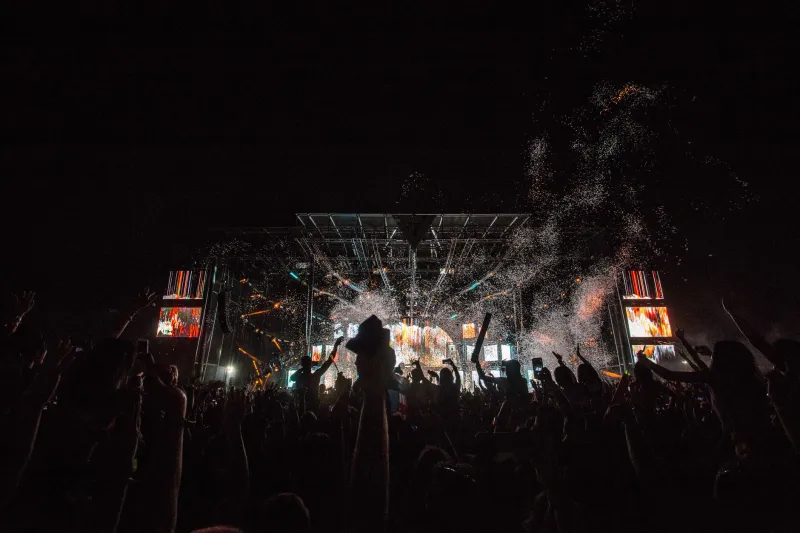
You've seen it happen. You're at your third festival of the summer, and the band you've been following since their second album walks out on stage. You already know the opener. You know the fake-out encore. You could probably hum the exact moment the confetti drops. And yet — you're still singing every word.
So what gives? Why do rock bands, especially the ones with deep catalogs and decades of material, seem surgically locked into the same 90-minute window of songs every single time they hit a festival stage?
The answer is a lot more complicated — and honestly, a lot more fascinating — than most fans realize.
It Starts Way Before the First Note
By the time a band walks out in front of 40,000 people at a place like Bonnaroo or Lollapalooza, months of logistical groundwork have already been laid. The setlist isn't just a list of songs. It's a production document.
"People think the setlist is an artistic decision made by the band the afternoon of the show," says one veteran touring production manager who has worked with major rock acts for over two decades. "In reality, it's been locked in for weeks, sometimes longer. Every song has a cue sheet attached to it. Lighting, pyro, video content — it all has to match."
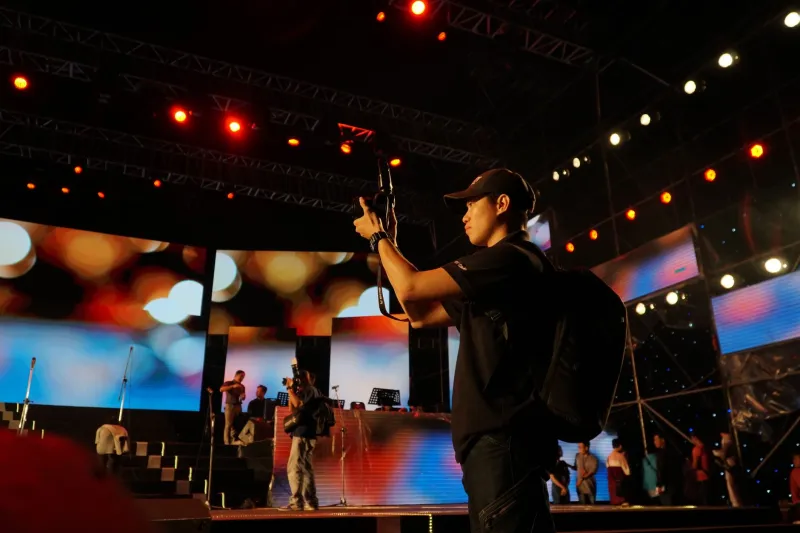
That's the part most fans never see. When a band commits to a setlist for a festival run, they're not just deciding which songs they feel like playing. They're essentially programming a synchronized multimedia event. Pyrotechnic cues are mapped to specific musical moments — the drop after a guitar solo, the final chorus of a closing anthem. Lighting rigs are pre-programmed with color palettes and movement sequences tied to individual tracks. Change the song, and you potentially blow up the whole visual architecture of the show.
For arena-level productions, the cost of reprogramming even a single show's lighting rig mid-tour can run into tens of thousands of dollars. At a festival, where load-in windows are tight and the crew might have four hours to build and strike a full stage, there's simply no room for improvisation.
The Pyro Problem
Pyrotechnics deserve their own conversation, because they are arguably the single biggest constraint on setlist flexibility at large-scale rock festivals.
"Pyro is not plug-and-play," explains a stage production coordinator who has handled effects for multiple major US festival circuits. "Every cue is filed with local fire marshals ahead of time. The quantities, the positions, the exact timing — it's all documented and approved before the band even arrives. If you swap a song out, you're potentially firing a flame cue at the wrong moment, or not at all, which means a crew member manually has to kill it in real time. That's a safety issue."
Bands that are known for elaborate pyrotechnic displays — think the kind of production that turns a rock set into a full-on spectacle — are the most locked-in of all. The music becomes the soundtrack to a choreographed event, not the other way around.
This doesn't mean accidents don't happen. Veteran performers will tell you that the occasional "happy accident" — a spontaneous jam, an unplanned cover, a detour into a deep cut — does occur. But those moments are the exception, not the rule, and they almost always happen in the middle of the set, in slots specifically left a little looser for exactly that purpose.
Audience Psychology: You Want the Hits, Whether You Admit It or Not
Here's the uncomfortable truth that production logistics alone can't explain: audiences are deeply complicit in setlist predictability.
There's a well-documented psychological phenomenon at play in live music settings. Fans experience what researchers call "anticipatory pleasure" — a spike in emotional response that occurs not when a song starts, but in the seconds before it starts, when the opening riff or drum pattern becomes recognizable. The more familiar the song, the more intense that anticipatory hit.
In plain terms: you get a rush the moment you realize what song is coming. And that rush is actually stronger for songs you've heard a hundred times than for songs you don't know yet.
"Bands figure this out pretty quickly," says a road manager who has spent fifteen years working with legacy rock acts on the festival circuit. "You can feel the crowd shift when you play something unfamiliar. They're polite. They might even appreciate it intellectually. But the energy is different. When you drop a song they know, the place loses its mind. That feedback loop is real, and it shapes setlists more than any production requirement."
This is especially true at festivals, where the audience skews broader than at a dedicated headline tour. At a festival, you've got die-hard fans in the front rows who know the B-sides, but you've also got thousands of casual listeners who showed up because they recognized two songs on the radio. The setlist has to work for both.
The Tension at the Heart of It All
Not everyone is comfortable with this reality. Talk to enough working musicians and you'll find a genuine undercurrent of frustration with the festival format's constraints.
One guitarist from a well-known American rock band — speaking anonymously because, as he put it, "I don't want to sound like I'm complaining about getting to play festivals" — described the tension plainly: "There are nights where you're on stage and you want to stretch something out, go somewhere unexpected, just play. But you can't, because the guy on the lighting board is already moving to the next cue, and if you extend the bridge by 30 seconds, the whole thing falls apart visually. You become a human jukebox in the best-looking jukebox in the world."
That tension — between the artist who wants to explore and the production that demands precision — is one of the defining contradictions of modern festival culture. The shows have never been bigger, louder, or more visually stunning. And they've arguably never been less spontaneous.
So Does Predictability Kill the Magic?
We asked a handful of festival regulars at this past summer's circuit what they actually thought about setlist predictability. The answers were more nuanced than you'd expect.
"Honestly? I want the hits," admitted one fan who had seen the same band four times across three different festivals. "I know that sounds boring, but there's something about being in a crowd of 50,000 people all screaming the same lyrics at the same time. That's the experience I came for."
Another veteran festival-goer pushed back: "The best show I ever saw was when a band clearly went off-script. Something broke, they had to fill time, and they just started playing stuff nobody expected. It was chaotic and real and I still think about it ten years later."
Maybe that's the real answer. The locked-in setlist is the foundation — reliable, polished, engineered for maximum impact. But the moments that become legend are almost always the ones where something cracks open in the middle of all that precision, and the band remembers they're not a machine.
The formula exists for good reason. But the magic? That still sneaks through when you least expect it.