Lightning Rods and Last Choruses: What Really Happens When a Storm Crashes a Rock Festival
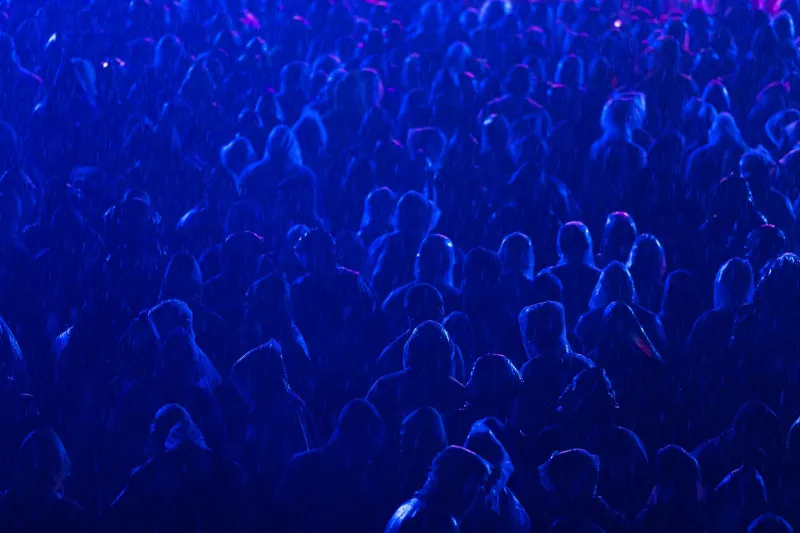
There's a particular kind of silence that falls over a festival crowd right before a storm hits. One second, sixty thousand people are losing their minds to a guitar solo. The next, someone looks up. Then another person. Then a whole section of the pit is staring at a sky that has gone the color of a bruise.
What happens in the minutes and hours after that moment — that's the story most festival recap articles never tell.
Weather and rock festivals have always had a complicated relationship. Rain turns fields into swamps. Lightning turns open-air stages into the last place you want to be holding a metal instrument. Heat waves quietly injure hundreds before anyone notices. And yet, year after year, some of the most talked-about festival moments in American history weren't born from a perfect setlist or a surprise guest — they were born from the sky going absolutely sideways.
The Machine Behind the Storm Plan
Long before the first band does a soundcheck, weather is already on the production team's radar — literally. Major US festivals like Lollapalooza, Bonnaroo, and Governors Ball contract private meteorological services that track conditions in real time, sometimes updating forecasts every fifteen minutes during high-risk windows. These aren't your standard weather app refreshes. We're talking hyper-local radar analysis, lightning detection systems, and direct communication lines between meteorologists and the festival's emergency operations center.
At Lollapalooza's Chicago home in Grant Park, the proximity to Lake Michigan makes weather forecasting a full-time obsession. The festival's production team operates under a lightning protocol tied to the 30-30 rule — if lightning is detected within six miles, or if thunder follows a flash by less than 30 seconds, evacuation procedures begin. That's not a soft suggestion. That's a hard stop.
 Photo: Grant Park, via www.reischeck.nl
The decision to pull the plug on a set — or an entire day — falls to a small group of people: the festival's safety director, local fire and emergency management officials, and in some cases, city permit holders who have legal authority to shut things down. Artists and their managers rarely have a seat at that table, which has historically been a source of friction. Nobody wants to be the act that got rained out. But nobody wants to be responsible for what happens if they don't call it, either.
When Bonnaroo Turned Into a Lake
Festival veterans who were at Bonnaroo in 2015 still talk about it like they survived something. A brutal combination of heat and then severe thunderstorms turned the Manchester, Tennessee grounds into a mudscape that swallowed shoes, tents, and gear with equal indifference. Stages were delayed, sets were shortened, and the general vibe toggled between miserable and weirdly euphoric depending on which camp you wandered into.
But the mud years at Bonnaroo — and there have been several — have also produced some of the festival's most enduring mythology. There's something about being absolutely drenched, boots completely destroyed, watching a band play through a downpour that strips away every pretense. You're not there to be seen. You're just there.
Production crews describe those moments as controlled chaos. "You're triaging in real time," one veteran stage manager who has worked multiple Bonnaroos explained in an interview with a music industry trade publication. "Is the stage structurally sound? Is the power protected? Are the artists safe? Are the fans in a position where they could be hurt? You're running through that checklist while also trying to keep communication calm because if the crew panics, the crowd picks up on it."
The Crowd Doesn't Always Know What You Know
One of the trickiest parts of severe weather management at a festival is information flow. Tens of thousands of people spread across multiple stages, campgrounds, and vendor areas can't all receive a PA announcement simultaneously. Cell networks get crushed under the load of everyone trying to text or post at once. And festival-goers, bless them, are often deeply reluctant to leave a spot they've been holding for four hours just because some guy on a stage is telling them to move toward the exits.
Festivals have gotten significantly better at this over the past decade. The shift toward festival-specific apps with push notification capability has been a genuine safety upgrade. When Governors Ball or Outside Lands can ping every app user simultaneously with a shelter-in-place alert, that's a meaningful improvement over hoping someone hears a crackling PA announcement over the ambient noise of fifty thousand conversations.
Social media has also changed the dynamic in complicated ways. On one hand, real-time posts from inside a festival can spread accurate safety information faster than any official channel. On the other hand, they can spread panic, misinformation, and wildly exaggerated accounts that make a manageable weather delay sound like the apocalypse.
The Sets That Became Legends Because of the Rain
Here's the thing nobody in festival safety planning wants to admit out loud: some of the greatest moments in American festival history happened because the weather went wrong.
Think about the artists who've leaned into it — who've kept playing through a downpour, or who've come back out after a lightning delay to find a soaked, exhausted crowd that was somehow more alive than before. There's a reason those stories circulate for decades. Shared adversity does something to a crowd that good weather simply can't replicate. When everyone is wet and cold and a little bit miserable and the band launches back into the set anyway, the communion is real in a way that a clear-sky, everything-went-perfectly show rarely achieves.
This isn't an argument for ignoring safety protocols. It's an acknowledgment that rock music has always existed in a certain amount of productive tension with comfort. The mud, the rain, the brutal afternoon sun — they're not bugs in the festival experience. For a lot of people, they're the whole point.
What You Should Actually Do When the Sky Goes Dark
For festival-goers, the practical reality is this: know the shelter locations before you need them. Every major US festival maps out designated weather shelters — usually hard structures like permanent buildings, parking garages, or reinforced vendor areas — and that information is in the app, on the website, and often on printed maps you grabbed at the entrance and immediately stuffed into your back pocket.
Don't wait for official word to start moving if conditions look dangerous. Lightning doesn't care that you have a great spot at the rail. Avoid tall structures, isolated trees, and open fields during electrical storms. And if you're camping, stake your tent like you mean it — festival grounds can go from calm to gusting in minutes when a front moves through.
Festivals have poured serious resources into weather preparedness over the past two decades, driven partly by tragedy, partly by liability, and partly by the genuine commitment of the people who build these events. The systems are better. The communication is faster. The protocols are more practiced.
But the sky is still the sky. It doesn't check the lineup before it decides to do something dramatic. And somehow, that unpredictability — that reminder that no amount of production budget fully tames the outdoors — is part of what keeps people coming back, year after year, mud on their boots and lightning on the horizon.