Recovered and Rewritten: The Lost Festival Tapes That Are Changing What We Know About Rock History
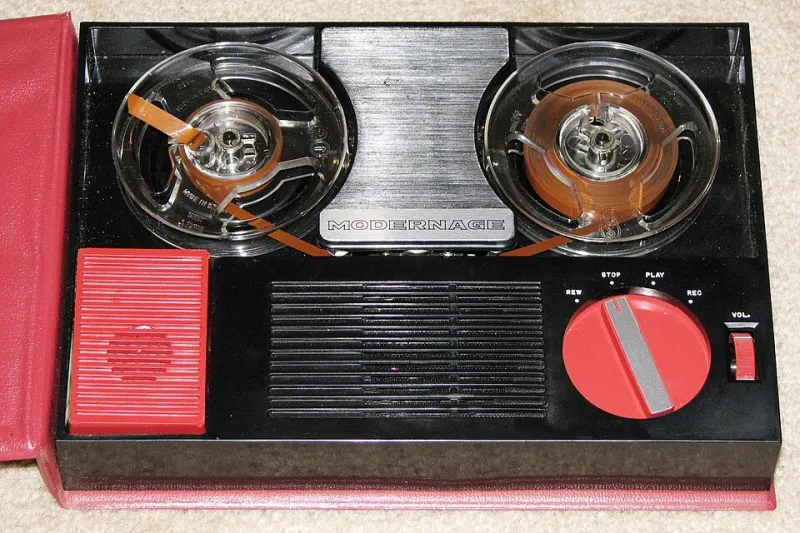
Photo: Joe Haupt from USA, CC BY-SA 2.0, via Wikimedia Commons
History, it turns out, has a storage problem.
For most of rock's festival era — running roughly from the late 1960s through the 1990s — the documentation of live performance was inconsistent at best and catastrophically incomplete at worst. Some shows were filmed with professional intent and still somehow lost. Others were captured on consumer-grade equipment by obsessive fans who understood, even then, that what they were witnessing mattered. Much of it ended up in boxes. Garages. Storage units. Estate sales. And for decades, it sat there while the official historical record calcified around whatever footage happened to survive.
That's changing now. And the implications for how we understand rock's festival legacy are bigger than most people realize.
The Vault Opens
The wave of archival releases that has defined the past several years of rock music — remastered box sets, officially sanctioned bootlegs, documentary-driven vault dumps — is only the most visible part of a much larger recovery effort happening at the margins of the industry.
In archives, university collections, and private hands across the country, recordings of festival performances that were presumed lost or simply forgotten are surfacing with increasing regularity. Some arrive through deliberate preservation projects. Others appear almost accidentally — an estate executor discovers a collection of reel-to-reel tapes, a storage unit gets auctioned off, a retiring soundboard engineer finally decides to do something with the recordings he's been holding for thirty years.
"The sheer volume of material that exists and hasn't been heard publicly is staggering," says audio archivist Donna Kellner, who has spent the last twelve years working on recovery and restoration projects for several major rock estates. "We're not talking about obscure bands. We're talking about recordings of significant performances by significant artists that simply fell through the cracks of history."
The reasons are varied. Some recordings were deliberately withheld — contractual disputes, quality concerns, or band members who simply didn't want certain performances in circulation. Others were lost to institutional neglect, the physical deterioration of magnetic tape, or the simple chaos of a music industry that wasn't particularly focused on preservation during its most commercially lucrative decades.
When the Tape Contradicts the Legend
Here's where things get genuinely interesting — and occasionally uncomfortable.
The official history of rock festival performance is built partly on documentation and partly on mythology. When documentation is sparse, mythology tends to fill the gap, and over time, the mythology can become more durable than whatever actually happened. A performance gets described in a 1978 magazine review as transcendent. That description gets cited in a biography. The biography gets cited in a documentary. The documentary becomes the reference point. And somewhere in that chain of repetition, the actual performance — whatever it was — gets replaced by its reputation.
When a recording surfaces that contradicts the established narrative, the results can be genuinely destabilizing.
"I've seen it go both ways," says collector and historian Ray Ostrowski, who has been acquiring and cataloging festival recordings for over two decades. "Sometimes you pull something out of a vault and it's even better than the legend. The performance really was that good, and now you have proof. But sometimes you pull something out and it's... not what the story said it was. And that's harder for people to sit with."
Ostrowski describes a specific case — he won't name the band, citing ongoing licensing negotiations — where a recovered recording of a celebrated festival set revealed that a widely quoted guitar solo, described in multiple published accounts as one of the great improvisational moments in rock history, was significantly shorter and less technically accomplished than the mythology suggested. "The story had grown in the retelling," he says simply. "The tape was the truth."
The Collectors Who Kept the Record Alive
Before the archivists and the estate lawyers and the streaming platforms, there were the collectors. The people who showed up at festivals with microphones hidden in their jackets. Who traded cassette copies through the mail. Who built elaborate cataloging systems for recordings that had no commercial value and enormous cultural significance.
The bootleg economy that sustained rock fandom for decades is now, somewhat ironically, one of the primary sources for historically significant recordings that are making their way into legitimate archives.
"A lot of what we're working with started as a bootleg," acknowledges Kellner. "Someone recorded it illicitly, someone else copied it, and it circulated underground for years. Now we're cleaning up those recordings and they're becoming part of the official historical record. It's a strange journey for a piece of audio to take."
The legal and ethical dimensions of this journey are complicated. Bootleg recordings exist in a gray zone that the music industry has historically treated with hostility and is now, pragmatically, treating with something closer to strategic tolerance. The recordings exist. They document history. Fighting their existence accomplishes nothing. Incorporating them into sanctioned releases, on the other hand, generates revenue and narrative control.
For the collectors who spent years being threatened with cease-and-desist letters, the current moment carries a certain irony. "We were the ones who cared enough to save this stuff," says one longtime bootleg archivist who asked not to be named. "Now the labels want to work with us. Which is great. But it would've been nicer if they'd cared twenty years ago."
What Gets Lost When the Record Gets Corrected
There's a version of this story that is purely celebratory: lost recordings surface, history gets corrected, fans get access to performances they never thought they'd hear. That version is real and worth celebrating.
But there's a harder question underneath it, one that the archivists and historians who work in this space tend to sit with more than the casual fan might. What happens to the meaning of a performance when the mythology around it gets revised?
Rock history is partly a record of what happened and partly a record of how people felt about what happened. Those two things are not always the same. The stories fans tell about great festival moments — the ones passed down through magazine archives and documentary films and late-night conversations between people who were there — carry an emotional weight that a corrected historical record doesn't automatically replace.
"The tape tells you what was played," says Ostrowski. "It doesn't tell you what it felt like to be standing in that field. Those are different kinds of truth."
This is the tension at the heart of the recovery movement: the pursuit of accuracy and the preservation of meaning don't always point in the same direction. Sometimes the legend served a purpose that the recording, however pristine, can't quite fulfill.
The Record Is Still Being Written
What's clear is that the official history of rock festival performance is less settled than we've been treating it. Every archive sale, every estate disclosure, every reel-to-reel tape pulled from a storage unit in Van Nuys or Austin or rural Ohio has the potential to add a chapter — or revise one.
For fans, that's mostly exciting. The possibility that a performance you thought was lost forever might still exist somewhere, waiting to be heard, is one of the more genuinely thrilling things about this moment in rock history.
For historians, it's a reminder that the record is always provisional. Always subject to revision. Always more complicated than the version that made it into print.
And for the bands whose legacies are being quietly reshaped by these recovered recordings? That's a conversation worth watching — because some of them are going to love what the tapes reveal, and some of them are going to wish the boxes had stayed closed.