Scroll to Signed: How Rock's New Discovery Pipeline Runs Through Your Phone

Photo by Photo by Alex Bracken on Unsplash on Unsplash
Let's be honest about something the music industry hasn't fully processed yet: the festival stage is no longer just a place to perform. For emerging rock artists in 2024, it's become the most powerful content creation opportunity on the calendar. And the labels know it.
The old path was linear. You played clubs, built a local following, got a manager, landed a booking agent, and eventually — maybe — an A&R rep caught your set at the right moment. That pipeline still technically exists. It's just been completely disrupted by a platform that wasn't designed for music discovery and turned out to be the most effective music discovery tool in a generation.
TikTok didn't kill the festival. It made it matter more.
The 60-Second Audition
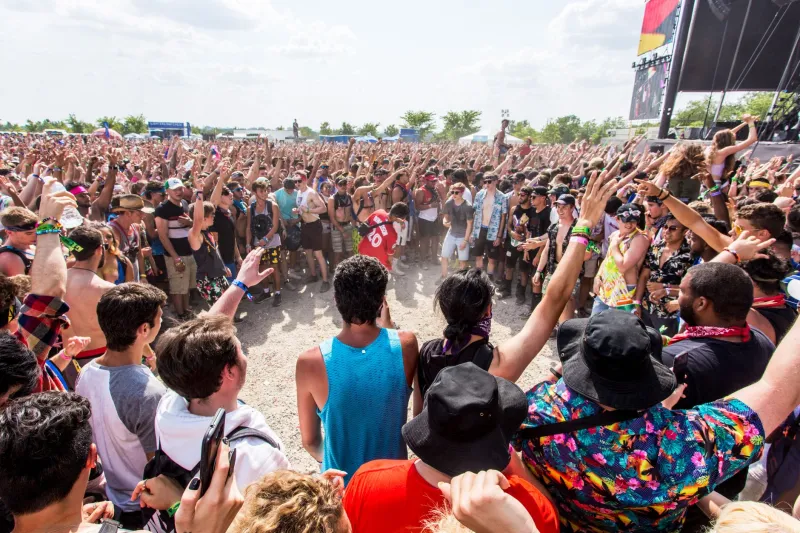
Here's what the new discovery moment actually looks like. A band plays a mid-afternoon slot at a regional US rock festival — the kind with 15,000 attendees and a secondary stage tucked between the food vendors and the merch tent. Someone in the crowd pulls out their phone. The guitarist does something extraordinary. The clip gets posted. By the time the band is loading their gear into the van, the video has 200,000 views.
This is not a hypothetical. It's a pattern that has repeated itself across the American festival circuit with enough consistency that bookers, managers, and label scouts have started building their strategies around it.
"We used to talk about a band's draw — how many people they could pull into a room," says one talent buyer who books for multiple mid-size US festivals and has watched this shift happen in real time. "Now I'm also looking at engagement. If a band can make something happen on a stage that makes strangers want to share it, that's a different kind of currency."
Festival Content Is Different
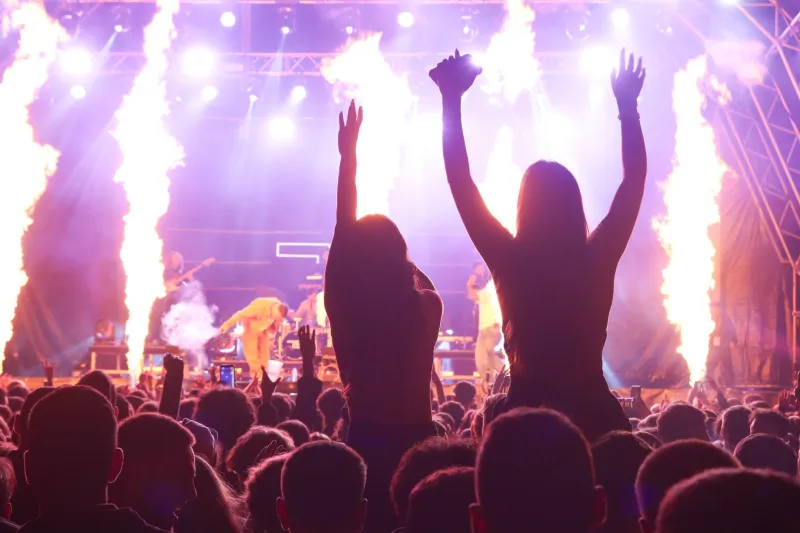
There's a reason festival clips perform differently than studio recordings or polished music videos on social platforms. Festivals are inherently dramatic environments. The production values are high. The crowd energy is visible and contagious. The stakes feel real. When something extraordinary happens on a festival stage, the footage captures all of that context automatically.
A band playing a headphone-quiet living room session doesn't carry the same emotional weight as that same band tearing through a song in front of a screaming crowd at golden hour. The festival setting does work that no marketing budget can replicate.
For rock specifically — a genre built on live energy — this matters enormously. A viral festival clip doesn't just show that a band can write a good song. It shows they can command a stage, connect with an audience, and survive the pressure of a real performance. That's the proof of concept labels used to have to see in person. Now they can watch it on their lunch break.
The Scouts Have Moved Online
Traditional A&R scouting involved a lot of plane tickets and late nights in venues. That still happens. But the first filter has shifted dramatically toward social platforms, and the festival circuit has become the primary generator of content that gets flagged.
"I follow setlist accounts, festival recap pages, and a handful of photographers who shoot at smaller stages," explains a music industry professional who works in artist development at a mid-size label. "If something is popping from a festival weekend, I usually know about it before Monday morning. The clip finds me."
This has created a feedback loop that's genuinely changing how festival lineups get built. Bookers are now actively monitoring social platforms for emerging artists whose content performs well, then booking them for festival slots specifically to generate more content. The festival appearance becomes both an opportunity and a test.
Bands that understand this dynamic are approaching festival appearances differently. They're thinking about moments — specific, visual, shareable moments — that can exist independently of the full set. A surprise cover. An unusual stage setup. A between-song interaction with the crowd that captures something genuine. These aren't accidents. They're architecture.
Case Studies in Viral-to-Viable
The pattern shows up repeatedly across the last few years of American rock. Bands who were genuinely obscure before a single festival clip broke through — not because labels suddenly discovered them, but because fans did first, and the labels followed the audience.
One common thread: the clips that travel fastest tend to capture authenticity rather than polish. A guitarist losing themselves in a solo. A vocalist breaking down mid-song and recovering. A crowd singing back lyrics the band didn't expect anyone to know. These moments resonate because they're real, and festivals are one of the few environments left where real things still happen on stage in front of large audiences.
The bands that have successfully leveraged this pipeline share another trait: they're responsive. When a clip starts moving, they engage with it. They post their own version. They interact with the fans who shared it. They treat the algorithm as a collaborator rather than an obstacle.
The Danger in the Algorithm
This isn't all upside, and it's worth saying clearly: building a career on viral moments is genuinely precarious. Algorithms change. Attention spans are brutally short. A band that blows up on TikTok in July can be functionally invisible by October if they don't have the catalog, the live show, and the infrastructure to sustain the momentum.
There's also a real tension between optimizing for social performance and developing as an artist. If every creative decision gets filtered through the question of "will this clip?" something important starts to get lost.
"The bands I worry about are the ones chasing the moment instead of building the thing," says the talent buyer. "A great festival clip can open a door. But you still have to walk through it with something real on the other side."
The Festival as Launch Pad
None of this means the festival experience itself has been reduced to content production. Far from it. What's actually happened is that the live rock experience — which was always the core of the genre's identity — has found a new distribution channel. The energy that used to stay in a field in Tennessee or a park in Chicago can now travel.
For emerging rock artists, that's a genuine opportunity. The festival stage has always been where careers were made. The only thing that's changed is how many people can watch it happen.