From the Pit to the Private Deck: The Velvet Rope Creeping Into Rock Festival Culture

There's a certain mythology baked into the American rock festival experience. You've heard the stories — or maybe you lived them. Sleeping in a car because the campsite was full. Trading a warm beer for a better spot near the stage. Locking eyes with a complete stranger during a guitar solo and knowing, without a single word, that you were both feeling the exact same thing. That was the deal. The music was the great equalizer, and the festival grounds were its church.
Something has changed.
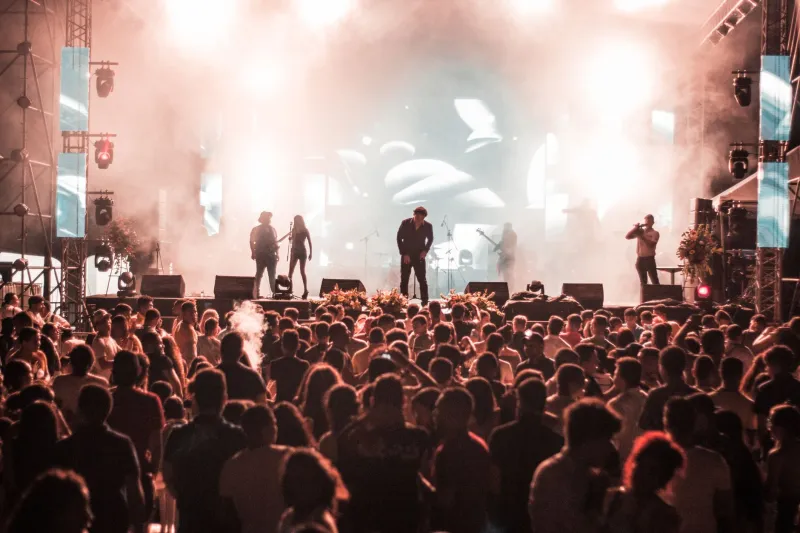
Walk into a major US rock festival today and you'll still find that energy somewhere — usually buried deep in the general admission crowd, sticky and sunburned and completely alive. But look to the side of the stage. Or up on that elevated platform behind the soundboard. Or over at the air-conditioned hospitality suite with the open bar and the chef-curated small plates. That's where another festival entirely is happening, one that costs anywhere from $1,500 to well north of $10,000 per person, depending on how many zeroes you're willing to add.
The tiered ticketing model has arrived in full force, and rock festivals — once the loudest defenders of egalitarian access — are right at the center of the debate.
How We Got Here
It didn't happen overnight. For decades, the basic festival ticket structure was pretty simple: general admission or reserved seating, maybe a VIP upgrade that got you a slightly cleaner bathroom and a wristband that felt important. That was about it.
Then the economics shifted. Headliner fees exploded. Insurance costs climbed. Streaming revenue hollowed out the music industry's middle class, which meant artists needed touring money more than ever, which meant festival slots got more expensive to book. Organizers started looking for new revenue streams, and they found one hiding in plain sight: the affluent fan who wanted the experience but not the discomfort.
Enter the platinum package. The VIP village. The artist meet-and-greet bundle. The private viewing deck with a dedicated bartender and a line of sight that most general admission attendees would trade their tent for. Festivals like Bonnaroo, Lollapalooza, and Austin City Limits — events with deep roots in the idea of communal rock culture — now offer tiered access that can segment the crowd into dramatically different financial brackets before a single chord is played.
 Photo: Austin City Limits, via images-wixmp-ed30a86b8c4ca887773594c2.wixmp.com
For organizers, the math is hard to argue with. Premium ticket holders represent a small fraction of total attendance but a disproportionately large share of revenue. That money, in theory, subsidizes the general admission experience — keeping base ticket prices from skyrocketing even further.
The View From the Pit
Tell that to someone who's been attending rock festivals for twenty years on a GA wristband.
"I've been going to festivals since I was nineteen," says one longtime attendee from Nashville who's been to more than forty events across the country. "Back then, the whole point was that you were all in it together. Rich, broke, it didn't matter once you were inside the gates. Now I'm standing in the rain watching someone on an elevated deck drink a cocktail with a clear view of the stage I've been elbowing toward for three hours. That changes the vibe. You can feel it."
It's not just a vibe shift, either. Physically, premium packages are reshaping festival geography. Private viewing platforms now occupy real estate that used to be accessible crowd space. VIP sections carve up the area closest to stages. The best sightlines, in some cases, are no longer something you earn by arriving early — they're something you purchase.
Cultural critics have started paying attention. The argument goes something like this: rock music, at its core, has always pushed back against hierarchy. From Woodstock's chaotic egalitarianism to the sweaty democracy of punk clubs, the genre's live experience was supposed to be one space where status didn't buy you access to something better. Tiered ticketing doesn't just challenge that tradition. It quietly dismantles it.
The Organizer's Defense
To be fair, festival organizers aren't exactly twirling their mustaches over this. Most will tell you they're navigating a brutal financial reality with limited good options.
"People don't realize what it costs to put on a three-day event at this level," one mid-size festival director explained in a recent industry panel. "We're talking about production, infrastructure, security, medical, artist fees — all of it. Premium tiers let us keep general admission prices accessible. If we didn't have that revenue coming in from the high end, we'd have to pass those costs on to everyone."
There's a legitimate point buried in there. General admission tickets at major US rock festivals have increased, but not nearly at the rate that production costs have climbed. Some of that gap is being bridged by the folks on the private deck. Whether that justifies the experience gap is a different question — and one that doesn't have a clean answer.
There's also an argument that premium packages have actually improved the overall festival experience. Shorter bathroom lines in GA areas. Less congestion near the stage. Better crowd flow. When a portion of the audience is funneled into dedicated premium zones, the general population sometimes benefits from the breathing room.
Sometimes.
Where the Line Gets Uncomfortable
The real tension isn't whether VIP sections should exist — most fans have made peace with some version of that. It's about how far the stratification goes before the shared experience stops being shared.
When a platinum ticket holder gets an exclusive acoustic set that GA fans can't access, that's not just a perk. It's a fundamentally different concert. When the best view of a legendary band's final tour is behind a paywall that most working fans can't clear, something is lost that no amount of revenue justification can fully replace.
Longtime rock fans talk about formative moments at festivals — seeing a band for the first time, being part of a massive crowd singing back a chorus, the feeling of collective electricity when a set transcends the ordinary. Those moments don't care how much your ticket cost. But as the physical and experiential distance between ticket tiers grows, the odds of those moments being truly shared across the crowd starts to shrink.
What Comes Next
The tiered model isn't going anywhere. The economics are too compelling and the demand from premium buyers is too real. But the rock festival world has always had a talent for absorbing contradictions — it's part of what makes it interesting.
The better question might be where the community draws its own line. Fans have real power here, even if it doesn't always feel that way. The festivals that maintain a genuinely inclusive atmosphere — that treat GA access as something worth protecting, not just tolerating — tend to build the kind of loyalty that outlasts any single lineup. The ones that let the velvet rope creep too close to the stage risk turning their event into something that looks like a rock festival but no longer feels like one.
Rock's greatest moments have always happened in the space between the artist and the audience — that invisible, electric connection that doesn't require a wristband color to access. The challenge for the next generation of festivals is figuring out how to keep that space open, even as the business model keeps trying to sell it off one tier at a time.