One Click, One Career: 6 Festival Photographs That Launched Bands Into the Rock Stratosphere
There's a version of rock history that lives entirely in sound — in studio recordings, radio edits, and streaming numbers. And then there's the version that lives in photographs. A single frame, captured at the exact right second during a festival set, has the power to do something no press release or label campaign can replicate: make you feel like you were there, even if you weren't — and make you desperately wish you had been.
Long before TikTok clips and Instagram reels dominated the conversation, the festival photograph was the primary vehicle for turning a buzzworthy live act into a genuine cultural phenomenon. And even in today's video-saturated environment, a perfectly composed still image still hits differently. These six shots didn't just document performances. They manufactured legends.
1. The Crowd Swallower (Unnamed Midwest Festival, Early 2000s)
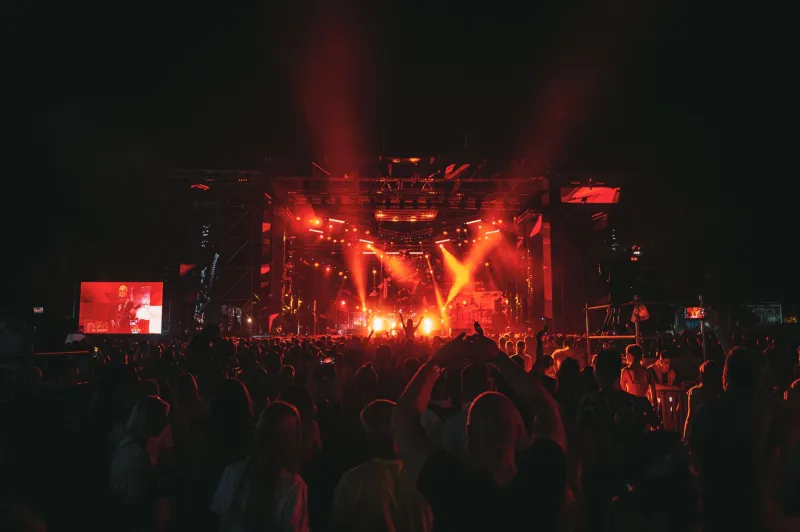
The band had maybe 300 people in front of their stage when the set started. By the time the photographer — a freelancer working the event on a press credential borrowed from a college newspaper — snapped the shot, the crowd had swelled to something closer to three thousand. The image showed the lead singer, arms outstretched, silhouetted against a sunset that looked almost digitally enhanced, with a sea of raised hands stretching back to the treeline.
The photo ran in a regional alt-weekly, got picked up by an early music blog, and within a week had circulated to enough industry inboxes that the band had three label meetings scheduled. The photo didn't lie — the performance had been genuinely electric — but it compressed an entire career arc into a single moment that anyone could understand at a glance.
2. The Stage Dive That Became a Symbol
Stage dives are a dime a dozen at rock festivals. But every now and then, one gets photographed at the exact angle that transforms a routine crowd interaction into something mythological. When a then-unknown guitarist launched himself off a monitor stack into the crowd at a Southern rock festival, the photographer on the photo pit rail caught him mid-arc — arms wide, guitar still strapped on, crowd reaching up like they were trying to catch something sacred.
The image made the cover of a regional music magazine, then got picked up by national outlets covering festival culture. Within a summer, the band had gone from regional opener to coveted festival booking. The guitarist later said the photo felt like looking at someone else — "I didn't even know anyone was shooting. I just jumped because it felt right."
3. The Quiet Moment That Screamed
Not every defining festival photograph is action-packed. One of the most circulated images in recent independent rock history shows a bassist sitting alone on the edge of the stage after a set, head bowed, sweat-soaked, while the crowd lingered below — not leaving, just standing there, not ready for it to be over.
The image was shared by a fan who'd taken it on a phone with a cracked screen. It went viral on Tumblr (back when that mattered enormously), landed on the radar of a major festival booker, and the band was offered a slot at a much larger event the following summer. That image of exhaustion and reverence communicated something that a highlight reel never could: this band had earned something that night.
4. The Fire and the Face
Pyrotechnics are a staple of big rock productions, but budget constraints mean most emerging acts don't have access to them. So when a festival's headliner accidentally triggered a pyro cue during an early-afternoon set by an opening act — nobody's fault, just a technical miscommunication — the resulting photograph was extraordinary. The young vocalist, completely unaware of what was about to happen, turned toward the explosion at the precise moment the camera fired.
The expression on her face — pure, unfiltered shock transforming into something that looked almost like triumph — became one of the most shared music images of that year. The band's Spotify streams tripled in the two weeks following the photo's viral circulation. Sometimes the universe just lines up.
5. The Photo That Made a Festival Famous, Not Just the Band
This one's a little different. The photograph that changed everything for one Pacific Northwest indie rock outfit also changed the perception of the small regional festival where it was taken. The image showed the band performing at golden hour on a hillside stage, with Mount Rainier visible in the background and fog rolling through the crowd.
The composition was so striking that it got licensed for use in a travel magazine's feature on Washington State. Suddenly, the festival itself was a destination — and the band that happened to be on stage during that perfect weather window became permanently associated with the venue's mythology. Bookings followed. Tours followed. The festival grew its attendance by forty percent the next year.
6. The Pit Photo That Broke the Internet (Before That Phrase Was Tired)
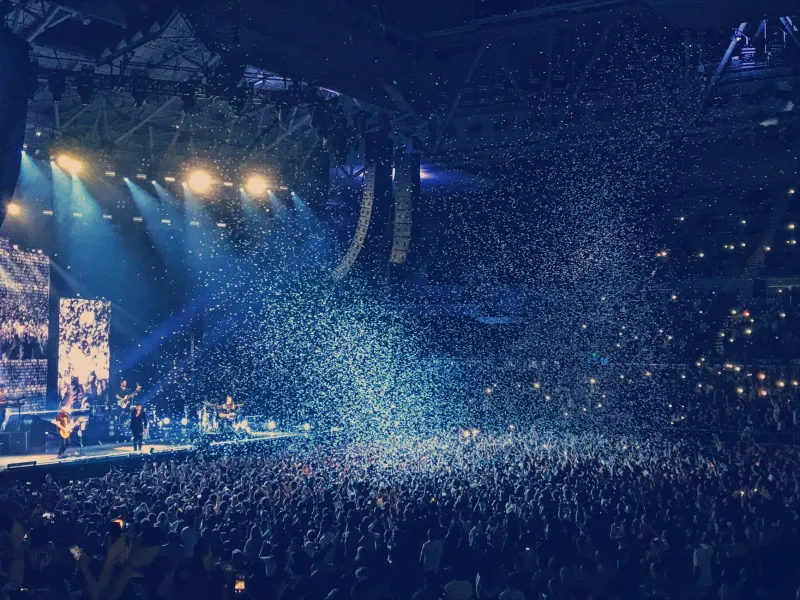
In the mid-2010s, when social media was still genuinely chaotic and exciting, a photo taken from the photo pit at a major East Coast festival showed a guitarist playing a solo while the crowd behind him had erupted into the kind of synchronized movement that looks, from above, like a living organism. The image was geometric and almost abstract — rows of bodies in motion, the lone figure at the center.
It got shared by a major music account with a massive following. By the next morning, the band's social media following had jumped by tens of thousands. Their next festival booking was a main-stage slot. The photographer later said she almost didn't take the shot — her card was nearly full and she was being selective. She deleted three other images to make room for it.
Why Still Images Still Matter in a Video World
You'd think that in an era when every festival performance is documented from forty different angles by fans with smartphones, the individual photograph would lose its power. But the opposite seems to be true. The sheer volume of video content has actually made a truly exceptional still image more valuable, not less. A great photograph cuts through the noise in a way that a three-minute clip simply can't.
For bands still grinding through the festival circuit, the lesson here isn't "hire a great photographer" (though that helps). It's that the festival stage remains one of the few places left in music where the unscripted, unrepeatable moment still happens — and when someone is there to catch it, careers change overnight.
The camera doesn't lie. But sometimes, it tells a truth even the band didn't know they were living yet.