Bots, Brokers, and Broken Dreams: The Festival Ticket War That's Leaving Real Rock Fans Behind

It starts the same way every time. The lineup drops. Social media erupts. You set your alarm for the on-sale, refresh the page at exactly the right second, and watch the available inventory vanish in under two minutes — only to reappear on StubHub an hour later at three times the face value.
This is the modern rock festival experience for millions of American fans, and it's getting worse.
The secondary ticket market for major music events now generates billions of dollars annually in the US alone. A significant chunk of that comes directly from rock and alternative festival culture, where devoted fan bases and limited capacity create the exact conditions scalpers — professional and amateur alike — have learned to exploit with surgical precision.
How the Machine Actually Works
Let's be clear about what's happening on the other end of that failed purchase. In most cases, you're not losing to another passionate fan who just happened to be faster. You're losing to automated software.
Ticket-buying bots can execute thousands of purchase attempts per second, bypassing queue systems and CAPTCHA barriers through a combination of rotating IP addresses, browser spoofing, and increasingly sophisticated AI workarounds. By the time a human fan types in their credit card number, a bot operator may have already secured dozens of tickets across multiple accounts.
Those tickets then get listed on resale platforms — StubHub, Vivid Seats, SeatGeek, and a constellation of smaller exchanges — at markups ranging from modest to genuinely obscene. For the most coveted US rock festivals, a face-value $175 three-day pass routinely appears on the secondary market at $400 to $900 before the first band is even announced for the second stage.
"It's a pure arbitrage play," says one ticket broker who agreed to speak on background. "I'm not a villain. I'm filling a market gap. If the festival priced their tickets correctly in the first place, there'd be no gap to fill."
That argument — infuriating as it is to fans — contains an uncomfortable grain of economic truth.
The Scalper's Defense (And Why It's Not Entirely Wrong)
Professional ticket resellers have become the music industry's favorite punching bag, and often for good reason. But the secondary market didn't emerge in a vacuum.
Festival promoters have historically underpriced their most in-demand events to generate positive PR and avoid the optics of appearing greedy. The gap between what the market will actually bear and what's printed on the ticket is, mathematically, an invitation for arbitrage.
"If a festival sells a ticket for $150 and the real market value is $400, someone is going to capture that difference," the broker continued. "The question is whether it's a scalper or the festival itself. Right now, scalpers are winning because festivals won't raise prices — they'd rather look like the good guys and let us take the heat."
That's a cynical read, but festival industry insiders quietly acknowledge the pricing tension. Some promoters have begun experimenting with dynamic pricing — essentially legal, first-party scalping — which solves one problem while creating a different kind of fan resentment.
What It Costs the People Who Actually Care
Behind every inflated resale listing is a real person who wanted to be there. Across rock fan communities on Reddit, Discord servers, and Facebook groups dedicated to specific festivals, the stories are remarkably consistent.
A teacher in Nashville who's attended the same festival for eight straight years missed out this year because the on-sale sold out before her school day ended. A college student in Phoenix saved for four months to afford a ticket, only to find face-value inventory gone before she could complete the purchase. A father in Ohio trying to take his teenage kid to their first rock festival gave up after the secondary market prices exceeded his monthly car payment.
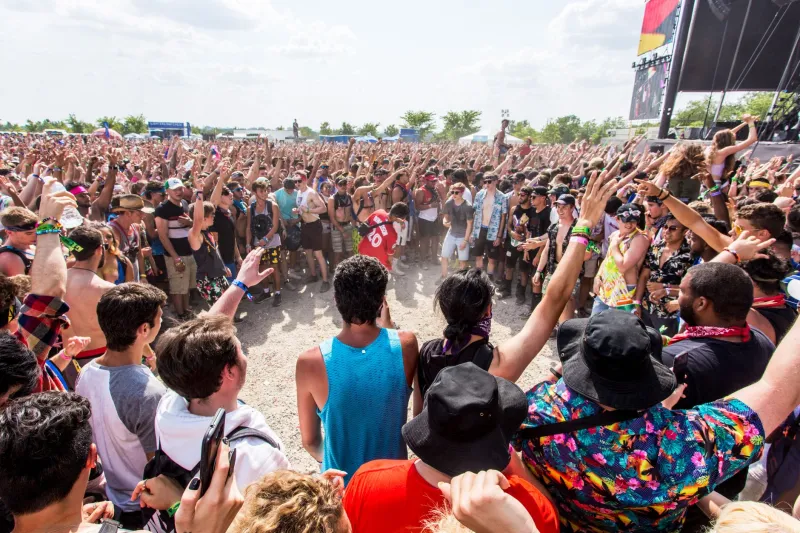
These aren't edge cases. They're the norm now, and they represent a slow erosion of rock festival culture's most important quality: accessibility. The communal, cross-demographic energy that makes a great rock festival transcend a simple concert depends on a crowd that isn't entirely composed of people wealthy enough to absorb a 300 percent markup without flinching.
How Festivals Are Fighting Back — and How Well It's Actually Working
The promoter response to the secondary market has been a mixed bag of creative solutions and half-measures.
Fan-verified ticketing systems — where buyers must register in advance with ID — have shown some promise in reducing bot purchases. Paperless ticketing tied to credit cards has made bulk resale harder, though determined brokers have adapted. Some festivals have implemented waitlist systems that redistribute returned tickets directly to verified fans at face value.
The BOTS Act, passed by Congress in 2016, technically made automated ticket-buying illegal under federal law. Enforcement, however, has been nearly nonexistent, and bot technology has continued to outpace regulatory action.
Artist-controlled fan club presales remain one of the most reliable ways for dedicated fans to access fair-price tickets, though even those systems have been infiltrated by bot operators who create fake fan accounts at scale.
Practical Moves for Fans Who Want a Fair Shot
Until the system changes structurally, there are strategies worth knowing. Sign up for official fan clubs and newsletter lists for the festivals you care about — presale codes distributed through those channels often represent the cleanest access to face-value inventory. Follow festival social accounts obsessively in the weeks before on-sale announcements, as flash sales and waitlist openings are sometimes announced with minimal lead time.
For secondary market purchases you simply can't avoid, stick to platforms with buyer guarantees and avoid peer-to-peer sales without escrow protection. And if you're willing to go day-of, festival gate sales and last-minute resale drops — when nervous holders unload tickets below their asking price — can occasionally produce real deals.
None of this is a satisfying answer. The honest truth is that the festival ticket market is broken in ways that individual consumer behavior can't fully fix. What it needs is structural reform — from promoters willing to get creative with pricing, from platforms willing to cap resale markups, and from lawmakers willing to actually enforce the rules already on the books.
Until then, set your alarm. Refresh obsessively. And try not to think too hard about who's on the other side of that countdown.