Gone But Not Forgotten: 10 American Rock Festivals That Burned Bright and Disappeared
The history of American rock festivals is littered with beautiful wreckage. For every Bonnaroo that figured out how to survive and evolve, there are a dozen that flared up brilliantly, drew tens of thousands of believers, and then collapsed under the weight of their own ambition, bad luck, or the simple cruelty of changing times.
This is their story — or rather, their obituary. Not a hit piece. Not a nostalgia trip. An honest reckoning with what these festivals gave us, and what ultimately took them down.
1. Woodstock '99 (Rome, NY)
We have to start here. Woodstock '99 didn't just die — it burned. Literally. Conceived as a 30th anniversary cash-in on the original festival's mythology, the 1999 edition was a masterclass in how to misread a cultural moment. Organizers charged $150 for tickets, sold $4 bottles of water in 100-degree heat, and booked a lineup that leaned hard into the aggression of late-nineties nu-metal without apparently considering what happens when you pack 200,000 frustrated people into a decommissioned air force base with no shade and nowhere near enough toilets. What happened was fires, violence, and multiple reported sexual assaults. The festival's name became a cautionary tale overnight. It hasn't returned, and at this point, probably shouldn't.
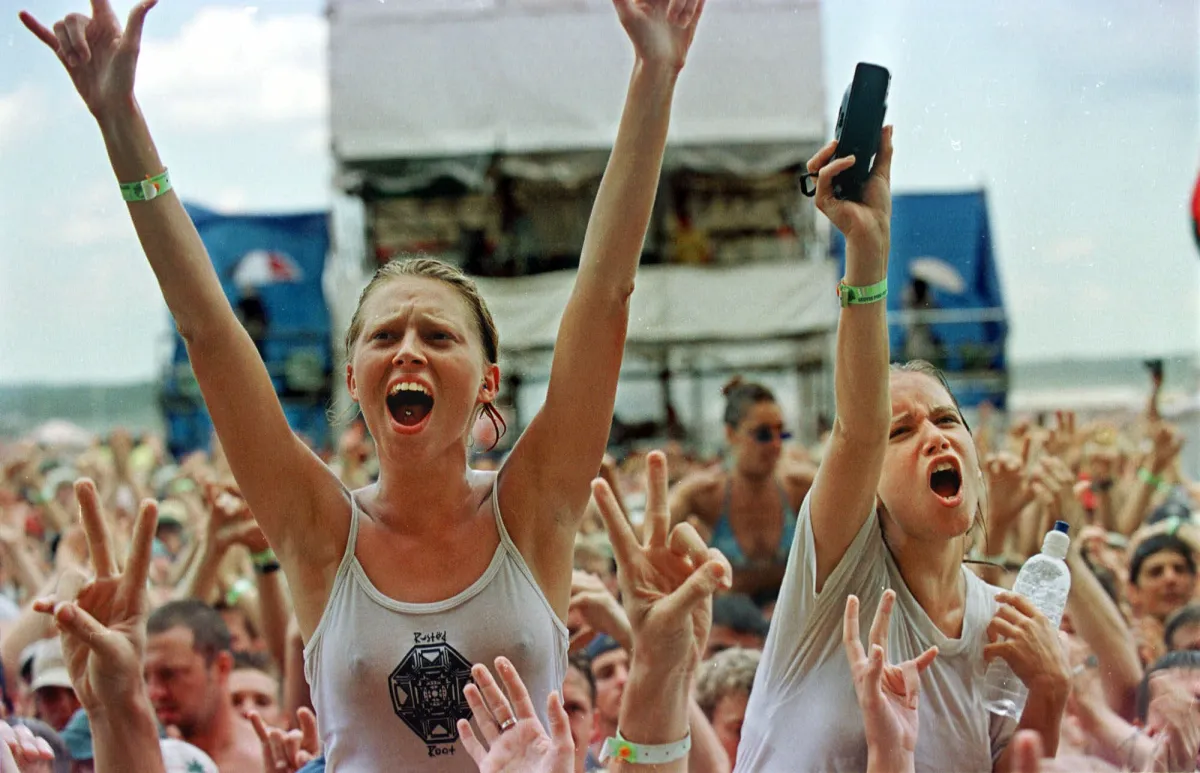 Photo: Woodstock '99, via cloudfront-us-east-1.images.arcpublishing.com
2. Lollapalooza (Original Touring Version, 1991–1997)
The original Lollapalooza wasn't just a festival — it was a statement of alternative culture's arrival in mainstream America. Perry Farrell's traveling carnival of the weird and loud brought Nine Inch Nails, Soundgarden, Rage Against the Machine, and dozens of others to cities that had never seen anything like it. But the touring model was expensive and logistically brutal, and by 1997 the cultural winds had shifted. Grunge was fading, the alternative bubble had burst commercially, and a planned 1998 edition was cancelled when headliner Metallica dropped out. The touring era was over. (The Chicago-anchored reboot came later, but that's a different festival with the same name.)
3. CBGB Music & Film Festival (New York, NY)
An attempt to extend the legacy of the legendary Bowery club into a broader cultural event, the CBGB Festival ran a few editions in New York before quietly fading. It suffered from a fundamental identity problem: CBGB the club was sacred because of its grit and specificity. A festival bearing that name but lacking that address felt like a tribute band playing the songs without understanding why the songs mattered. The spirit didn't transfer, and attendance reflected it.
4. Edgefest (Various US Editions)
Several regional Edgefest events — tied to alternative radio stations in markets like Dallas and Toronto — had genuine runs of success through the late nineties and early 2000s. But they were fundamentally tethered to the commercial radio ecosystem, and as that ecosystem crumbled under the weight of digital disruption and shifting listener habits, the festivals went with it. When the radio station stopped mattering, so did the festival it sponsored.
5. Ozzfest (Touring, Peak Era)
Ozzfest didn't die quietly — it mutated. Sharon and Ozzy Osbourne's heavy metal traveling show was a genuine cultural force from 1996 through the mid-2000s, giving a generation of metal fans their first real festival experience and launching careers for bands like System of a Down, Disturbed, and Avenged Sevenfold. But a combination of lineup controversies, the infamous 2005 incident where Sharon allegedly orchestrated an egg-throwing attack on Iron Maiden's Bruce Dickinson, and the general fragmentation of the metal audience eroded its dominance. Sporadic revivals haven't recaptured the original energy.
6. All Points West (Liberty State Park, NJ)
All Points West had everything going for it — a stunning location with views of the Manhattan skyline, serious headliners (Nine Inch Nails, Jay-Z, Radiohead), and a metropolitan audience hungry for a major festival close to home. It ran for two years, 2008 and 2009, and then stopped. The culprit was mostly financial: the economics of running a large-scale festival in the New York metro area, with its attendant costs and logistical complexity, simply didn't pencil out. A beautiful idea that the math killed.
 Photo: Liberty State Park, via gd-hbimg.huaban.com
7. Warped Tour (1995–2018)
Warped Tour ran for 24 years, which is a remarkable achievement for any touring festival. But its end wasn't exactly graceful. By the mid-2010s, the punk and pop-punk scene that had sustained it was fracturing, the audience was aging out, and a wave of serious allegations against founder Kevin Lyman's business partner and other figures in the Warped ecosystem cast a long shadow over the legacy. The 2018 farewell tour was bittersweet. For millions of teenagers across two decades, Warped was their first festival. That means something. But the circumstances of its end complicated the goodbye.
8. Virgin Festival (Multiple US Cities)
Richard Branson's attempt to plant a major festival brand on American soil had moments of genuine quality — the Baltimore edition in particular drew strong lineups and respectable crowds. But the Virgin Festival suffered from a branding problem: it felt like a corporate product in a space where authenticity is everything. Festivalgoers sensed the transactional nature of it, and the events folded without leaving much of a cultural footprint.
9. Gathering of the Vibes (Bridgeport, CT)
For a long time, Gathering of the Vibes was a faithful keeper of the jam band and Grateful Dead tradition, drawing loyal crowds to Bridgeport every summer for nearly two decades. But the niche it occupied was always precarious, dependent on a specific community of fans whose numbers weren't growing. Financial difficulties mounted, and the festival played its final edition in 2016. It was mourned sincerely by those who loved it, which is probably the most dignified ending on this list.
10. Rockingham (Nashville, TN)
Rockingham is a more recent casualty and a cautionary tale for the streaming era. Launched with ambition and a legitimate rock-focused identity in a city that had been starved for that kind of event, it struggled to compete for booking dollars and audience attention in an increasingly crowded market. It folded after a brief run, a reminder that even a good idea in a good market can get swallowed by the noise.
What the Graveyard Teaches Us
Look across these ten stories and patterns emerge. Festivals die from hubris (Woodstock '99), from math (All Points West), from cultural displacement (Edgefest), from scandal (Warped Tour), and sometimes just from the slow erosion of the specific community they were built to serve (Gathering of the Vibes).
What almost never kills a festival is the music itself. The lineups were usually fine, often great. What kills festivals is everything surrounding the music — the contracts, the permits, the water prices, the egos, the weather, the economics of a business that has almost no margin for error.
The festivals worth mourning are the ones that, for at least a few summers, got the music part right. And most of the ones on this list did. That's why we're still talking about them.