Small Stages, Big Dreams: The Underground Festival Circuit That Launched 10 Rock Bands Into the Stratosphere
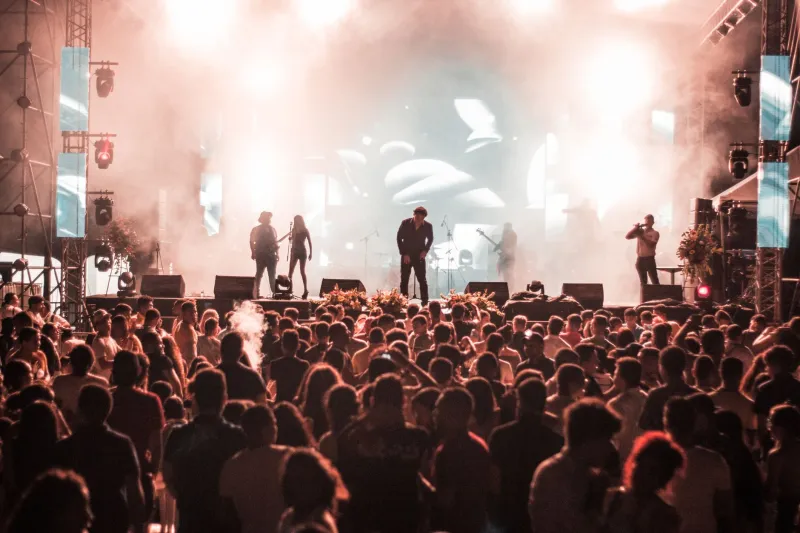
Every rock legend has a story that starts somewhere unglamorous. A half-empty parking lot stage in Austin. A county fair in rural Ohio. A 2 p.m. slot at a regional music showcase where half the crowd is still looking for the beer tent. But for a surprising number of bands that now headline arenas and anchor major festival lineups, those early, low-stakes performances weren't stepping stones — they were launchpads.
We dug into the origin stories of ten DIY rock acts whose regional festival appearances cracked open doors that no amount of social media grinding alone could have opened. What we found is less about luck and a lot more about hustle, timing, and knowing how to make 200 people feel like 20,000.
Why Festivals Work Differently Than Club Gigs
Ask any band manager who's shepherded an emerging act through the grind, and they'll tell you the same thing: festivals expose you to audiences who weren't there for you. That's the whole game.
"A club show is a controlled environment," says one longtime independent music manager based in Nashville who has worked with multiple acts that broke out through the South by Southwest circuit. "The people in that room mostly already know your name. A festival? You're playing to strangers. If you can win over strangers, you can go anywhere."
 Photo: South by Southwest, via c8.alamy.com
That dynamic — performing for skeptical, distracted, or simply curious passersby — forces bands to sharpen their live show in ways that rehearsal rooms never can. It's a pressure cooker, and the bands that thrive in it tend to be the ones that make it.
SXSW: The Proving Ground That Keeps Proving Itself
No conversation about emerging rock acts and festival momentum is complete without South by Southwest. Austin's sprawling annual music showcase has a decades-long track record of surfacing talent before the rest of the country catches on.
The format is almost perfectly designed for a scrappy rock band on a budget. Multiple showcases across multiple venues mean a determined act can play three or four sets in a single day, building word-of-mouth in real time. Industry scouts, journalists, and playlist curators all converge in one city for one week, and a single set that catches fire can generate more career traction than a year of regional touring.
Several acts that now sit comfortably on the main stages of Lollapalooza and Bonnaroo can trace their first serious industry attention back to a SXSW showcase. The formula tends to be consistent: a tight 30-minute set, a song or two that stops people mid-stride on Sixth Street, and a follow-up EP ready to hand off to anyone who asks.
The State Fair Circuit: Underrated and Underestimated
Here's one that surprises people. State fairs don't exactly scream cutting-edge rock discovery, but the audiences at these events are enormous, diverse, and genuinely open to being entertained. For a rock band willing to dial back the attitude and focus on pure performance energy, the state fair circuit has quietly served as a proving ground for acts that later found their footing on more prestigious stages.
The key, according to musicians who've navigated this route, is adaptation. You're not playing to a room full of rock fans. You're playing to families, older country music lovers, and teenagers who stumbled over from the midway. Bands that learn to command that kind of mixed crowd develop a stage presence that translates everywhere.
"You figure out real fast what actually works live versus what you just think works," one guitarist from a mid-Atlantic rock act recalled about their early state fair appearances. "There's nowhere to hide behind atmosphere or a sympathetic crowd. You either grab people or you don't."
Regional Festivals With National Reach
Beyond SXSW, a handful of regional festivals have developed reputations as genuine tastemaker events that punch well above their geographic weight. Festivals in markets like Denver, Chicago, Seattle, and Atlanta have all served as early platforms for acts that went on to much bigger things.
What makes these events particularly valuable for emerging bands is the combination of local media attention and traveling industry presence. A strong performance at a well-regarded regional festival can land a band in local alternative press, attract the attention of booking agents looking for fresh talent, and generate streaming bumps that catch the eye of label A&R teams — all from a single weekend.
The bands that maximize these opportunities tend to share a few traits. They come prepared with professional-quality recordings to hand off or stream. They work the crowd before and after their set, treating every conversation as a potential connection. And they follow up — relentlessly, professionally, and without burning bridges.
The DIY Infrastructure Behind the Breakthrough
It's easy to romanticize the festival breakthrough moment — the transcendent set, the crowd going wild, the manager spotting a future star from the back of the tent. But the real story is usually built on months or years of unglamorous logistics.
Bands that successfully use the festival circuit as a launchpad typically invest heavily in their live setup long before they can afford to. Borrowed vans, self-booked routes connecting festival appearances with club dates, and road crews that double as merch sellers and social media managers are all part of the picture. The goal is to build regional density — to become the band that everyone in a given area has seen live — before attempting to scale nationally.
Social media plays a supporting role, but musicians and managers consistently emphasize that it's a supplement to real-world performance, not a replacement. A viral clip from a festival set can accelerate momentum, but it almost always comes after the live work has already been done.
What Fans Can Watch For
If you're the kind of festival-goer who loves discovering the next big thing before the rest of the world catches up, the early-afternoon slots on secondary stages are where you want to spend your time. Look for bands that play with a hunger that the headliners have long since metabolized into professionalism. Watch for the act that makes the crew stop what they're doing to listen.
The bands in this story all had one thing in common at their breakout moments: they played like the main stage was already theirs. The festival circuit has a way of sorting out who actually belongs there — and for the acts that make it, those small stages were never small at all.