Loud, Quiet, Loud: The Deliberate Sonic Surgery Behind How Rock Bands Reshape Their Songs for Festival Crowds
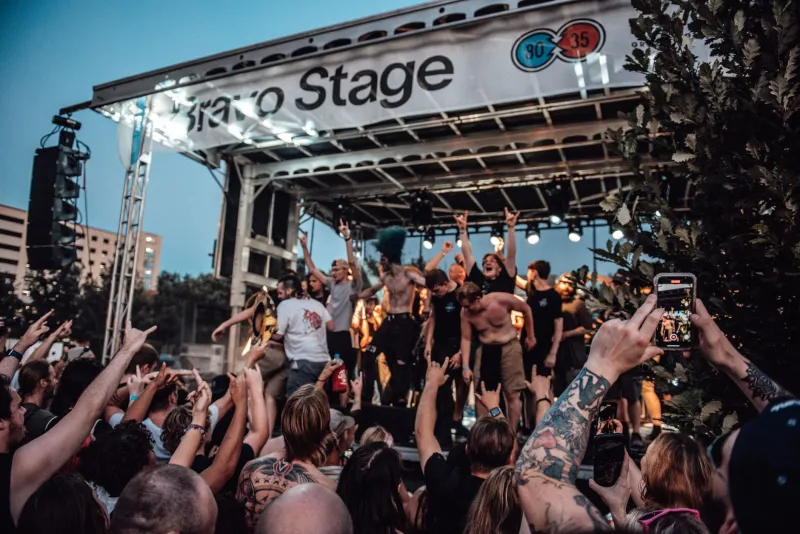
You're standing in a field. Forty thousand people around you. A band you've loved for a decade kicks into a song you've heard maybe five hundred times on headphones — and somehow, it sounds completely different. Bigger in some places. Rawer in others. A guitar part you memorized is gone, replaced by something that hits harder in the open air. You don't consciously register the change. You just feel it land.
That feeling isn't an accident. It's architecture.
The process of adapting studio recordings for festival stages is one of the least discussed and most consequential crafts in live rock music. Bands, sound designers, and production teams spend weeks — sometimes months — making surgical decisions about which elements of a track to amplify, which to pare back, and which to throw out entirely. The results shape the festival experience in ways that go way beyond just "turning it up."
Why the Studio Version Doesn't Survive Contact with a Festival Field
The first thing to understand is that a studio recording and a live festival performance are fundamentally different animals. In the studio, a producer can layer twelve guitar tracks, bury a vocal in reverb, and use precise EQ to carve out space for every instrument. On a festival stage — especially an outdoor main stage with variable wind, crowd noise, and a PA system projecting sound across a quarter mile — most of that detail evaporates.
"The low-mids just eat everything outdoors," says one veteran front-of-house engineer who has mixed main stages at major US festivals for over fifteen years. "What sounds lush and full in a club or on a record becomes a wall of mud in an open field if you're not careful. You have to make space where the recording never needed it."
That space-making is where arrangement decisions start. Bands working with experienced live production teams will often strip a track down to its skeleton before rebuilding it specifically for the stage. Keyboard pads that fill space on a record might get cut entirely. A second guitar layer that reinforces the chorus might get pushed up to become the dominant melodic voice. Bass frequencies get reshaped to punch through crowd noise rather than sit warm and low.
The Songs That Get Blown Up
Not every track gets the same treatment. Some songs are built for amplification — and bands know it before they even hit soundcheck.
Anthemic choruses with simple, repeated hooks are almost always candidates for expansion. The arrangement might stay close to the record, but the dynamics get exaggerated. The drop before the final chorus gets quieter. The payoff gets louder. The crowd is invited into a moment of collective release, and the production team engineers the sonic conditions to make that release feel inevitable.
"There are songs that are just latent festival songs," one touring guitarist explained during a conversation at a mid-sized US summer festival. "They were written in a room but they were clearly meant for an open space. You can feel it when you play them. The song almost tells you to open it up."
Bridge sections often get extended for the same reason. A four-bar instrumental break on a record might become an eight or twelve-bar moment live, giving the crowd time to breathe and the band time to build genuine tension rather than manufactured studio tension.
The Songs That Stay Sacred
Then there are the untouchables.
Every band has them — songs whose arrangements are so specific, so tied to a particular sonic identity, that altering them feels like a betrayal. These are usually the tracks that defined a band's sound at a critical moment: the song that got them radio play, the one that became the centerpiece of a breakthrough album, the one the fanbase has a near-religious relationship with.
For these tracks, the production goal shifts from reimagining to replicating — or at least creating the emotional impression of the original. That might mean bringing in specific gear to match the studio tone. It might mean rehearsing a particular vocal blend until it mirrors the record closely enough to trigger the memory associated with it.
"You mess with certain songs and you lose the crowd," the front-of-house engineer noted. "Not because they notice the change. Because they feel the absence of something familiar. It's almost subconscious. They came for that specific feeling, and if the song doesn't deliver it, they check out for a second."
Crowd Energy as a Real-Time Variable
Here's where things get genuinely fascinating: even the most carefully planned festival arrangement is subject to in-the-moment revision.
Experienced bands and their production teams build flexibility into setlists specifically to respond to what a crowd is giving back. If the energy is running high, a stripped-down moment planned for mid-set might get scrapped in favor of keeping the intensity up. If a crowd is responding more emotionally than expected to a slower track, a band might extend it, lean into it, let it breathe longer than rehearsed.
"The best festival sets feel like conversations," said one production designer who has worked with multiple legacy rock acts on US summer tours. "The band is talking to the crowd through the music, and the crowd is talking back through their energy. A good production team is listening to both sides of that conversation and adjusting in real time."
Monitor mixes — what the band hears onstage — also shift based on crowd response. If a vocalist is pushing harder to connect with a big crowd, the monitor engineer adjusts to support that. If a drummer is reading the energy and pulling back, the front-of-house mix compensates to maintain the bottom end the audience feels in their chest.
The Detail You Never Noticed
The next time you're at a festival and a band plays a song you know inside out, try listening for the gaps. The places where something from the record isn't there. The moments where something new has been inserted to fill the space. The chorus that hits harder than it should. The breakdown that goes a few bars longer than you expected.
That's not sloppiness. That's craft. That's a team of people — engineers, arrangers, musicians, production designers — who spent weeks thinking about exactly how to make you feel something in a field full of strangers.
The studio version is a document. The festival version is a live organism, shaped by the air, the crowd, the moment, and a hundred invisible decisions made by people whose names never appear on the ticket. And when it all works? You feel it in a way that no recording can fully replicate — which is, ultimately, the whole point of showing up.