Roll the Dice: Inside the Final-Week Chaos When Rock Bands Rewrite Their Festival Playbook
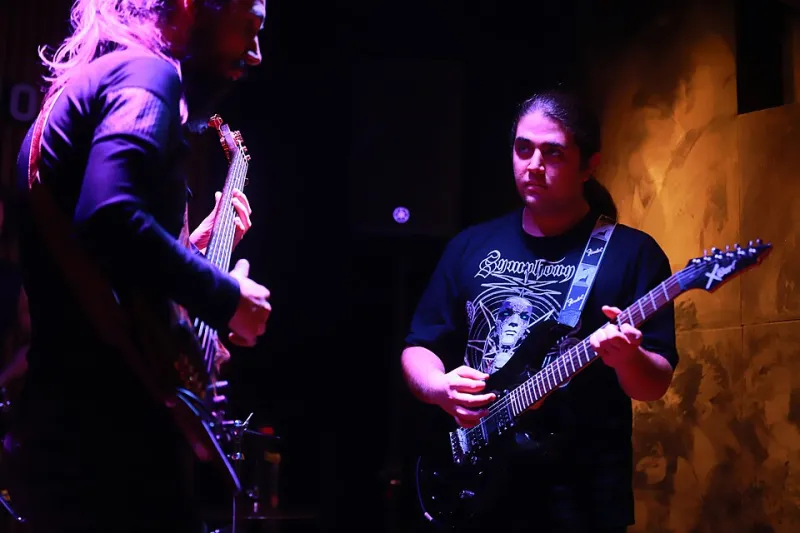
Photo: Mostafameraji, CC BY 4.0, via Wikimedia Commons
Somewhere in a rented rehearsal space outside Nashville — fluorescent lights humming, empty coffee cups stacking up on a folding table — a guitarist is arguing with her bandmates about a song nobody has played live in four years. It's six days before their festival slot. The setlist they've been touring with all spring is sitting on a whiteboard, and half of it is already crossed out.
This is what the week before a major rock festival actually looks like for a lot of bands. Not polished run-throughs. Not smooth logistics. Pure, high-stakes second-guessing.
"You spend months building a set that works," said one vocalist who's headlined multiple summer festivals and asked to stay anonymous to protect label relationships. "Then you get close to a big show and you start wondering if 'works' is enough. And that's when the trouble starts."
The Itch Nobody Can Ignore
Festival audiences are different from your average tour crowd, and every working musician knows it. A Thursday night club show in Columbus draws your ride-or-die fans — people who know the deep cuts, who've seen the band fifteen times. A Saturday afternoon festival slot in front of 40,000 people includes a massive chunk of casual listeners who caught one song on a playlist and decided to wander over. That tension — between serving your core audience and grabbing the attention of everyone else — is what drives the final-week scramble.
Producers who work with touring rock acts describe a predictable pattern. The closer a festival date gets, the more a band starts stress-testing their assumptions. Songs that felt safe suddenly seem boring. Intros that killed in theaters feel too small for an open field. And somewhere in that anxiety, someone always floats the idea of debuting something new.
"It's like pre-game jitters but with actual professional consequences," said Marcus Reilly, a live production coordinator who has worked with acts across the festival circuit for over a decade. "A bad call on a club tour costs you a weird Tuesday night. A bad call at a major festival? That clip lives on the internet forever."
The Debut Gamble
Debuting new material at a festival is one of rock's oldest power moves — and one of its most dangerous. The upside is obvious: a new song dropped in front of a massive crowd generates immediate buzz, social media noise, and signals that a band is moving forward rather than coasting on catalog. The downside is just as real. New songs haven't been road-tested. The arrangements aren't locked. The band hasn't figured out where to breathe yet.
One drummer who plays in a mid-tier rock act with a loyal following described a specific festival appearance two summers ago where the band decided, five days out, to open with a track from an album that wasn't even released yet. "We'd played it maybe eight times in rehearsal. Not eight shows — eight total run-throughs. We figured the festival energy would carry us."
It didn't, exactly. "The song was fine. But 'fine' at a festival debut feels like failure. We'd hyped ourselves up so much internally that anything less than transcendent felt like a disaster." The track did eventually become a fan favorite. But the band spent weeks convincing themselves the festival version wasn't the version people remembered.
Contrast that with a different kind of gamble — retiring a classic. Some acts go into final-week rehearsals specifically to strip out the song everyone expects and replace it with something that reframes who they are. It's artistically bold and commercially terrifying.
The Producers in the Room
Not every final-week decision comes from inside the band. Producers and creative directors often get pulled in specifically to serve as reality checks — the people willing to say "that's a great idea and it will absolutely not work in front of 30,000 people."
Reilly described one session where a band was dead-set on extending their closing song into a fifteen-minute experimental outro. "They'd been doing it in small venues and it was genuinely cool. But a festival set has a hard stop. Stage managers are not your friends when you go over time. And that crowd is going to thin out after minute eight no matter what you're playing." The extended outro got cut. The band was annoyed. The set ran tight and got strong reviews.
That negotiation — between artistic ambition and practical reality — is the invisible drama of every festival week. The bands that navigate it well tend to be the ones who've done it before, who've learned the hard way that a festival stage is its own instrument with its own rules.
When It Works, It Really Works
For every story of a gamble gone sideways, there's one that lands exactly right. A song dusted off after years in storage becomes the moment everyone talks about. A debut track connects instantly and the crowd sings a chorus they've never heard before just because the energy demands it. A stripped-down version of a massive hit stops 20,000 people cold in the best possible way.
Those are the moments that make the sleepless final-week rehearsals feel worth it. They're also the moments that are nearly impossible to plan for — which is kind of the point.
"You can't engineer magic," said one guitarist who's been through the process more times than she can count. "But you can put yourself in a position where magic is at least possible. That's what the week before is really about. You're not trying to be perfect. You're trying to be ready for something unexpected to happen."
The setlist is never really finished until the first note hits. And for a lot of bands, that's exactly the way they want it.