Band Chemistry, Festival Politics: The Hidden Social Map That Decides Who Gets Booked Next to Whom
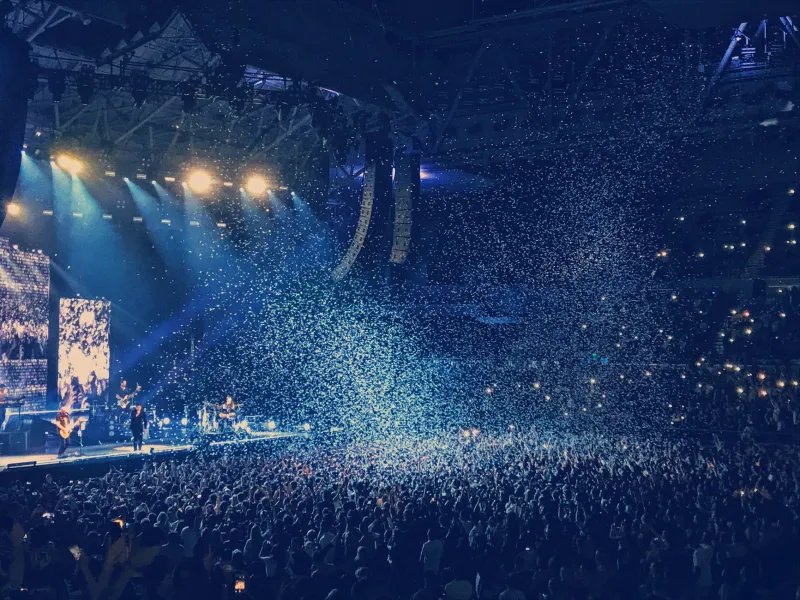
A festival lineup announcement is, on the surface, a straightforward document. Names on a poster, ranked by font size, organized by stage and time slot. You read it, you figure out your schedule, you buy your ticket.
But if you know how to look at it differently, that same poster is something else entirely. It's a relationship map. A record of alliances and grudges accumulated over years of shared history. A coded document that tells you, if you know the language, which bands in that lineup will be hanging out at each other's trailers on Saturday night and which ones will be avoiding eye contact in the catering tent.
The social architecture behind rock festival bookings is one of the industry's most genuinely fascinating open secrets — and it shapes the festival experience in ways that go far deeper than most fans ever consider.
The Promoter's Unspoken Checklist
When a major US festival promoter assembles a lineup, the public conversation is almost entirely about music: genre balance, demographic appeal, headliner drawing power. What doesn't make it into the press release is the other checklist — the one that tracks interpersonal dynamics between artists.
Experienced festival producers maintain what amounts to a social graph of the touring rock world. They know which bands came up together on the same regional circuit. They know which frontmen have publicly feuded. They know which rhythm sections have played together across three different bands. They know who will show up for a friend's set and who will sit in a blacked-out tour bus to avoid crossing paths with a former collaborator.
"You're not just booking music," one festival production veteran explained. "You're booking people. And people bring their history with them. If you put two acts on the same stage on the same day who genuinely can't stand each other, that tension bleeds into everything — load-in, catering, the backstage vibe. The audience doesn't see it, but the crew feels it all day."
The practical consequences range from minor inconveniences to genuine logistical nightmares. Bands that are close friends often share production resources — backline gear, crew members, even rehearsal time in the days before a festival. Bands that are in active conflict may require completely separate load-in schedules, dedicated backstage areas, and careful traffic management to ensure their paths never cross on-site.
How Friendship Shows Up in the Lineup
The clearest visible evidence of real band relationships is stage placement and timing — and once you start looking for it, you see it everywhere.
Bands that are genuine friends tend to cluster on the same stage on the same day. This isn't coincidence. Promoters know that artists with strong personal connections will support each other's sets, create genuine backstage energy, and sometimes collaborate spontaneously — which, from a festival programming perspective, is pure gold. A surprise guest appearance between two acts who actually like each other is a completely different event than a manufactured cameo arranged by management teams who barely communicated beforehand.
The timing of sets also carries social information. When a well-established act is slotted directly before a newer band they've publicly championed — mentioned in interviews, brought out on tour, posted about on social media — that sequence is rarely accidental. Promoters are aware of those endorsements, and they book accordingly, knowing the established act's audience will stick around for the set that follows.
Conversely, competing acts with overlapping fanbases and documented tension almost never share a day on the same stage. They might both appear at the same festival across a multi-day run, but the scheduling will keep them insulated from each other — different days, different stages, different peak time slots. The fans get both bands. The bands don't have to deal with each other.
The Feuds That Shaped Festival History
Rock music has never been short on documented conflicts, and the festival circuit has been the backdrop for some of the most consequential ones. The interesting thing about feuds in the festival context isn't the drama itself — it's how that drama reshapes booking decisions for years afterward.
When two major acts have a public falling-out, the immediate effect is obvious: they stop appearing on the same bills. But the longer-term effect is subtler. Their respective orbits — the bands they're close to, the producers they work with, the crews they share — start to sort themselves into camps. A promoter booking one of those acts knows, implicitly, that certain other acts are less available to them as a result. The social graph shifts, and the lineup possibilities shift with it.
Some of the most significant feuds in US rock festival history have never been fully documented publicly, precisely because the parties involved prefer to let the booking decisions speak for themselves. The absence of two acts on the same bill for a decade tells its own story, even without a public statement.
The Alliances You Might Have Missed
If feuds create invisible walls in festival lineups, genuine alliances create invisible corridors — and some of the most enduring ones in rock are between acts whose connection isn't immediately obvious to casual fans.
Geographic origin plays a bigger role than most people realize. Bands that came out of the same regional scene — the same clubs, the same local promoters, the same early bills — carry a shared history that persists long after both acts have broken nationally. That shared history creates a baseline of trust and mutual respect that makes them natural festival companions, even when their sounds have diverged significantly.
Production relationships are another underappreciated alliance vector. Two bands that have shared a sound engineer, a lighting designer, or a tour manager across multiple cycles have a working relationship that extends beyond personal friendship. They understand each other's production requirements. They know how to share stage time without creating logistical friction. Promoters value that compatibility enormously.
"Some of the smoothest festival days I've ever worked were because the top three acts on the bill had all toured together at some point and already knew how to coexist," a longtime stage manager reflected. "The whole backstage runs differently when people actually know each other."
Reading the Poster Like an Insider
The next time a major US rock festival drops its lineup, try reading it as a social document rather than just a schedule.
Look at which acts share a stage on the same day. Look at the sequence of sets — who follows whom, and whether that sequence mirrors any public endorsements or documented connections. Look at who's conspicuously absent from a bill that would otherwise seem like a natural fit for them, and ask yourself whether that absence might be less about scheduling conflicts and more about something that happened backstage three years ago that never made it into the press.
The music is the headline. The relationships are the story underneath it. And at the biggest rock festivals in the country, those two things are almost never as separate as the poster makes them look.